
How To
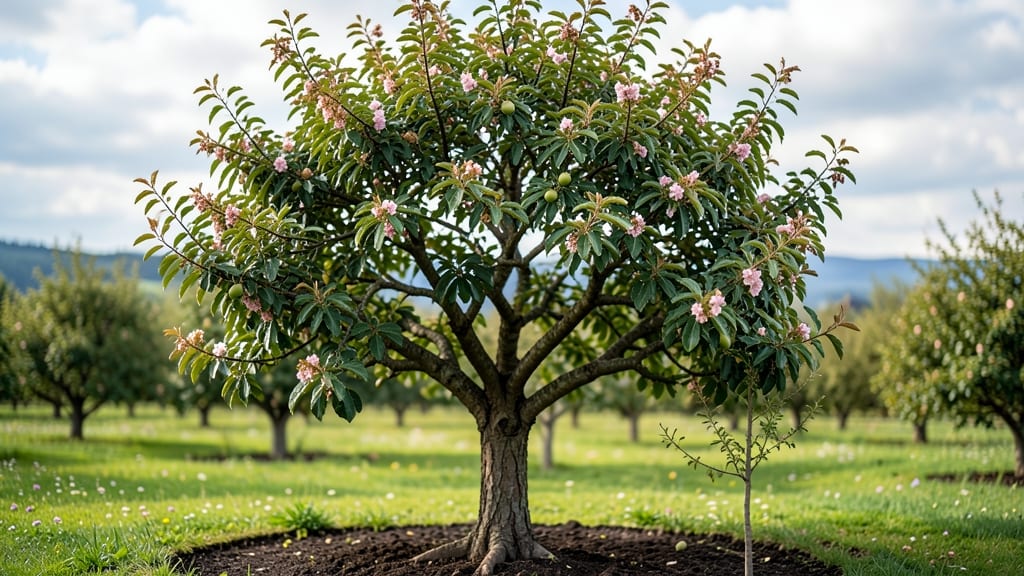
A plum tree 🍑 can grow anywhere from 8 feet to towering 30 feet tall, depending on the variety and care you provide.
If you're dreaming of a fruitful plum tree in your backyard but wondering how much vertical space it’ll need, you’re not alone. Some varieties stay compact enough for small gardens, while others reach heights that rival a two-story house.
Understanding the mature size of your chosen plum tree is the first step to planting it successfully.
Whether you’re working with a dwarf variety that fits neatly into a patio corner or a standard tree that needs room to stretch its branches, knowing the growth potential helps you plan your garden layout.
In this guide, we’ll break down the height ranges for popular plum varieties, share tips for managing growth, and help you choose the perfect size for your space—whether that’s a cozy container or a sprawling backyard.


Plum tree height by variety: dwarf to standard sizes explained
Choosing the right plum tree variety depends heavily on your garden's vertical space. Some plum trees grow as tall as a two-story house (20-30 feet), while dwarf varieties stay compact at 8-12 feet.
Understanding these height differences helps you select the perfect tree for your yard, balcony, or even large containers.
Plum trees come in three main size categories: dwarf, semi-dwarf, and standard. Each has unique space requirements and growth habits. Dwarf varieties are ideal for small spaces, while standard trees need ample room to thrive. Let’s break down the height expectations for each category with practical examples.
📋 Summary Table: Plum Tree Heights by Variety
| Variety Type | Mature Height (ft) | Width (ft) | Best For | Notes |
|---|---|---|---|---|
| Dwarf (e.g., 'Patio,' 'Spire') | 8–12 | 6–8 | Containers, small yards | Requires staking; needs pruning |
| Semi-Dwarf (e.g., 'Santa Rosa,' 'Methley') | 12–18 | 10–15 | Backyards, urban gardens | Balanced size; easy to manage |
| Standard (e.g., 'Stanley,' 'Burbank') | 20–30 | 15–25 | Large properties, orchards | Needs pruning; wide canopy |
| Columnar (e.g., 'Ultra Dwarf') | 6–10 | 3–4 | Narrow spaces, patios | Grows vertically; minimal width |
Dwarf plum varieties like 'Patio' or 'Spire' are perfect for small gardens or even large containers. These trees typically reach 8-12 feet tall and 6-8 feet wide, making them ideal for urban settings. They require regular pruning to maintain shape and may need staking to support their compact structure.
Semi-dwarf varieties such as 'Santa Rosa' or 'Methley' offer a middle ground, growing to 12-18 feet tall with a spread of 10-15 feet. These are versatile choices for most backyards, offering a balance between manageable size and abundant fruit production. Semi-dwarfs are also easier to prune than standard varieties.
Standard plum trees, like 'Stanley' or 'Burbank', are the tallest, reaching 20-30 feet and spreading 15-25 feet wide. These majestic trees need plenty of space and are best suited for large properties or orchards.
Their wide canopies provide ample shade but require regular pruning to control growth and maintain fruit quality.
For those with limited space, columnar varieties like 'Ultra Dwarf' are a game-changer. These trees grow vertically to 6-10 feet tall but only 3-4 feet wide, making them perfect for narrow gardens or even along fences. Their upright growth habit saves space without sacrificing fruit production.
When selecting a plum tree, consider not just height but also spread and fruit-bearing habits. Some varieties, like 'Stanley', produce heavy crops that may require sturdy branches.
Others, like 'Santa Rosa', are more manageable for home gardeners. Always check the USDA hardiness zone for your region to ensure the variety thrives in your climate.
If you’re unsure about your garden’s space, opt for a dwarf or semi-dwarf variety—they’re forgiving and easier to manage. For larger properties, standard trees offer the reward of bountiful harvests and stunning aesthetics.
Either way, proper spacing and pruning will ensure your plum tree grows healthy and productive for years to come.
🌱 Whether you’re a city dweller with a balcony or a rural homesteader with acres, there’s a plum tree height that’s perfect for you.
How to choose the right plum tree size for your garden space
Choosing the perfect plum tree for your garden starts with understanding mature height expectations. A standard plum tree can reach 20 to 30 feet tall, while dwarf varieties stay between 8 to 12 feet.
Your yard size, sunlight, and maintenance goals will determine which size suits you best.
For small urban gardens or patios, dwarf plum trees are ideal—they fit neatly in containers and require minimal pruning. Larger yards can accommodate semi-dwarf varieties (12-18 ft) or full-size trees for a traditional orchard feel. Always check spacing recommendations to avoid overcrowding.
Plum Tree Size Comparison
- ✅ Perfect for containers
- ✅ Minimal pruning needed
- ✅ Ideal for small yards
- ✅ Early fruiting (3-5 years)
- ✅ Balanced for medium spaces
- ✅ Moderate pruning required
- ✅ Longer lifespan than dwarf
- ✅ Better wind resistance
- ✅ Traditional orchard look
- ✅ Requires regular pruning
- ✅ Needs large yard space
- ✅ Takes 5-7 years to fruit
- ✅ Use 5-gallon pots for dwarfs
- ✅ Ensure drainage holes are present
- ✅ Rotate pots for even sunlight
- ✅ Repot every 2-3 years
When selecting a plum tree, consider your local climate zone. Cold-hardy varieties like Stanley or Black Diamond thrive in zones 4-8, while Santa Rosa prefers zones 5-9. Always match the variety to your last frost date to ensure successful fruiting.
For pruning tips, focus on removing dead or crossing branches during late winter. Thin out 20% of the canopy annually to improve airflow and fruit production. Use sterilized tools to prevent disease spread between cuts.
If space is limited, consider espalier training—this technique grows plum trees flat against a fence or wall, saving horizontal space while maintaining height. Just ensure the wall faces south or west for optimal sunlight exposure.
Remember, soil quality impacts growth too. Amend heavy clay with compost or sand, and ensure well-draining soil to prevent root rot. Mulch around the base with wood chips to retain moisture and regulate soil temperature.