
How To
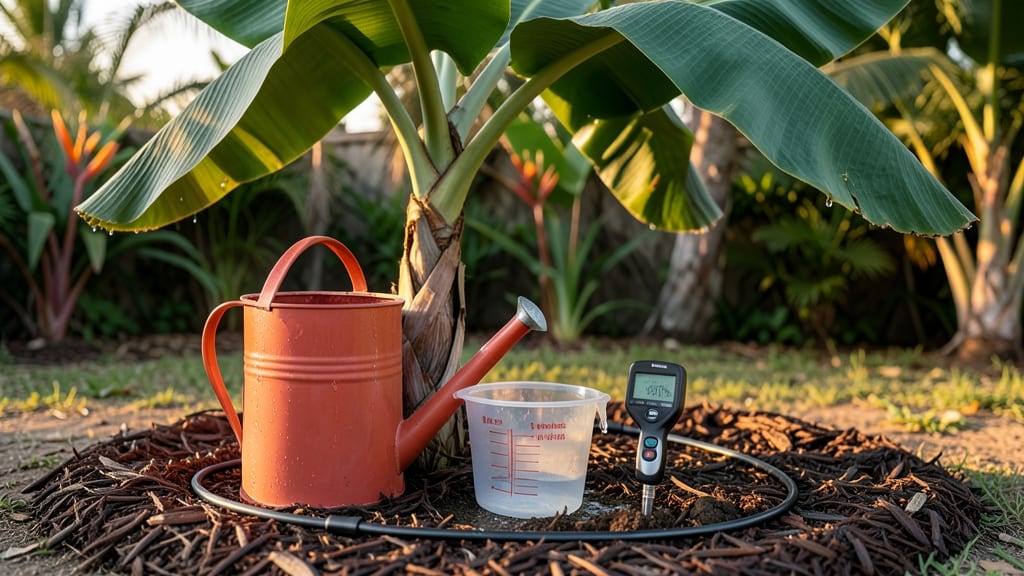
A banana tree 🍌 needs about 1-2 gallons of water per day during its active growing season—more than most plants, and the wrong amount can mean the difference between lush growth and a struggling tree.
Picture this: your tropical beauty wilts under the midday sun, its leaves curling at the edges, or worse, the soil around it stays soggy for days, turning the roots to mush.
Neither scenario is ideal, and both are easy to avoid once you know the exact watering formula for your banana tree’s stage of growth.
In this guide, I’ll break down how much water your banana tree needs daily, how to adjust for seasonal shifts and soil types, and the telltale signs that you’re either drowning or starving it.
Whether you’re growing a 10-foot dwarf or a towering 30-foot giant, these tips will keep your tree thriving year-round.
You’ll also learn how to spot the difference between thirsty roots and waterlogged soil, plus pro tips for efficient irrigation that save time and water. Let’s get your banana tree the perfect drink every day!
Daily water requirements for banana trees by growth stage
Banana trees are tropical powerhouses that demand consistent moisture to thrive, but their water needs change dramatically from seedling to fruit-bearing maturity. As a gardener, I’ve learned that overwatering and underwatering can both spell disaster—yellowing leaves or root rot are common red flags I’ve seen in my own garden.
The key is understanding how much water your banana tree needs at each growth stage, from its first sprouts to heavy fruiting.
Young banana plants are delicate and require gentle, frequent watering to establish strong roots, while mature trees can handle deeper, less frequent soaks. I’ve found that soil moisture and environmental factors like humidity and temperature play huge roles in adjusting your watering schedule.
For example, my dwarf Cavendish in Florida needs daily watering in summer but only every other day in cooler months. Let’s break down the exact water needs for each stage so you can keep your banana tree happy and productive.
| Growth Stage | Daily Water Amount | Frequency | Soil Moisture Check | Key Notes |
|---|---|---|---|---|
| Seedlings (0-6 months) | 1/2 gallon (1.9L) | Daily | Top 1-2 inches dry | Keep soil evenly moist; avoid waterlogging |
| Juvenile (6-24 months) | 1-1.5 gallons (3.8-5.7L) | Every other day | Top 3-4 inches dry | Increase water as plant grows; mulch helps retain moisture |
| Mature (2+ years, non-fruiting) | 2-3 gallons (7.6-11.4L) | Every 2-3 days | Top 4-6 inches dry | Deep watering encourages strong stem growth |
| Fruiting Stage | 3-5 gallons (11.4-18.9L) | Daily (deep soak) | Top 6+ inches dry | Critical for fruit development; monitor for yellowing leaves |
| Container-Grown | 1-2 gallons (3.8-7.6L) | Daily (containers dry faster) | Top 2-3 inches dry | Use self-watering pots for consistency |
For seedlings, I start with shallow but frequent watering—about half a gallon daily—to encourage root development without overwhelming the young plant. The soil should never dry out completely, but it’s also crucial to avoid waterlogged soil, which can cause root rot.
I check moisture by sticking my finger about 1-2 inches deep; if it feels dry, it’s time to water. During this stage, I’ve found that morning watering is best to reduce fungal risks from evening moisture.
When your banana tree enters the juvenile stage (6-24 months), its water needs increase significantly. At this point, I water every other day with 1-1.5 gallons per watering. The deeper root system can handle more moisture, but I still monitor the top 3-4 inches of soil.
I’ve noticed that juvenile plants are more resilient to slight droughts, but consistent watering prevents leaf scorch. Adding a 2-3 inch layer of mulch around the base helps retain moisture and keeps roots cool—something I learned the hard way when my first banana tree wilted during a heatwave.
Mature banana trees that aren’t yet fruiting need deep, infrequent watering—about 2-3 gallons every 2-3 days. The key here is to water deeply enough to encourage the roots to grow downward rather than staying shallow.
I test soil moisture by checking 4-6 inches deep; if it’s dry, the tree is ready for another soak. During this stage, I’ve seen how proper watering leads to thicker stems and stronger overall growth.
However, I always avoid watering the leaves to prevent fungal diseases like sigatoka leaf spot, which can devastate your plant.
When your banana tree finally reaches the fruiting stage, its water needs peak dramatically. A fully grown, fruiting banana tree can require 3-5 gallons of water daily, especially in hot climates. This is when I increase my watering frequency to daily deep so
Seasonal watering adjustments for optimal banana tree health
Banana trees adapt their water needs with the seasons, but understanding these shifts is key to avoiding stress. In spring, as temperatures rise and new growth begins, your tree will drink more aggressively.
Meanwhile, summer demands peak hydration, while winter slows metabolism—meaning less frequent watering. Humidity and rainfall also play critical roles, often reducing your manual watering needs during wetter months.
Your banana tree’s watering schedule should mirror its natural tropical environment. During spring, aim for 1-2 gallons of water every 1-2 days, increasing as leaves unfurl.
In summer, when heat peaks, deep watering daily may be necessary, especially in containers. Winter care shifts dramatically—reduce to bi-weekly watering unless your tree is in a frost-free zone, where minimal moisture suffices.
Seasonal Watering Guide for Banana Trees
Spring
- ✅ 1-2 gallons every 1-2 days
- ✅ Increase as leaves emerge
- ✅ Monitor soil moisture (top 2" dry)
Summer
- ✅ Daily deep watering (1-2 gallons)
- ✅ Early morning watering only
- ✅ Check for wilting by noon
Winter
- ✅ Bi-weekly watering (½ gallon)
- ✅ Reduce if in frost-free zones
- ✅ Avoid soggy soil
Rainfall can drastically cut your manual watering needs. In regions with consistent rainfall (e.g., 1-2 inches weekly), reduce watering by 30-50%. However, if your area experiences drought conditions, supplement with drip irrigation to maintain soil moisture.
Mulching with straw or wood chips helps retain moisture and mimics the tree’s natural habitat.
Watch for leaf curl or yellowing—these are early signs of water stress. During summer, if leaves droop by midday, increase watering immediately. Conversely, mushy stems or blackened pseudostems signal overwatering. Adjust your schedule based on these visual cues, not just the calendar.
For container-grown banana trees, watering needs are higher due to limited soil volume. Check soil moisture daily in summer, as pots dry out quickly. In winter, reduce to every 3-4 days unless your home lacks humidity. Grouping pots together creates a microclimate that retains moisture longer.
Drought survival hinges on deep, infrequent watering. If your tree faces dry spells, water once weekly with 3-4 gallons per tree, focusing on the root zone. Avoid shallow watering, which encourages weak roots. Pair this with organic mulch to lock in moisture and protect roots from heat stress.