
Plants
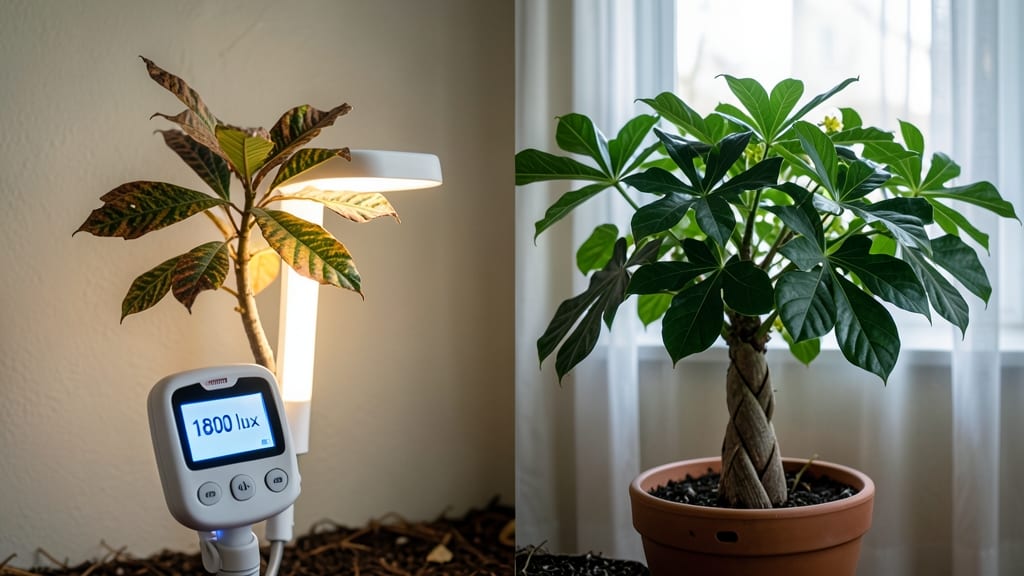
A money tree plant needs bright, indirect light for 4 to 6 hours daily to grow its iconic braided stems and lush leaves—too little or too much can stunt its progress.
If your money tree 💰 is struggling to grow despite your care, light exposure might be the missing puzzle piece—too little or too much can stunt its iconic braided stems and lush leaves.
This tropical shrub thrives in east or north-facing windows, where sunlight filters gently without scorching the leaves. Too much direct sun causes crispy edges, while dim corners lead to leggy, sparse growth.
Below, I break down how to spot light issues, adjust your home’s placement, and even use artificial light to keep your money tree flourishing year-round.


Ideal light requirements for a healthy money tree plant
The money tree (Pachira aquatica) thrives with bright indirect sunlight, making it perfect for indoor spaces near windows. Too little light causes leggy growth, while direct sun can scorch its delicate leaves. Understanding its light needs is key to maintaining those signature braided stems and vibrant foliage.
In nature, this tropical plant grows under dappled canopy light, which mimics the filtered sunlight of its native rainforest habitat. Replicating these conditions indoors ensures your money tree stays lush and healthy year-round, even in winter months when natural light dims.
Key light requirements: 4-6 hours of bright, indirect light daily. East or north-facing windows provide ideal exposure, while south or west-facing windows may require sheer curtains to diffuse harsh rays.
For indoor placement, position your money tree 2-3 feet from an east-facing window to capture morning sunlight without afternoon intensity. If using a south-facing window, place it 6 feet back and use a sheer curtain to prevent leaf burn.
Seasonal adjustments are crucial: during winter months, supplement natural light with a LED grow light (12-14 hours/day) if your home lacks sufficient brightness. In summer, watch for direct sun exposure through large windows, which can cause leaf scorch by midday.
Outdoor placement is possible in USDA Zone 10-11 during summer months. Choose a spot with morning sun and afternoon shade, like under a patio umbrella or near a building wall. Never leave it in direct midday sun, which can damage leaves within hours.
Watch for light deficiency signs like yellowing leaves or slow growth. These indicate your money tree needs more bright indirect light. Conversely, crispy brown edges signal excessive direct sun—immediately move the plant to a shadier spot and increase humidity with a pebble tray.
Pro tip: Rotate your money tree quarter-turn weekly to ensure even light exposure. This prevents one-sided growth and keeps those braided stems symmetrical and strong. Consistent light from all directions encourages balanced foliage development.
Remember, your money tree's light needs change with growth stages. Young plants tolerate lower light conditions than mature specimens, which require more intense indirect light to support their larger leaf surface area. Adjust placement as your plant grows taller.
With the right light balance, your money tree will reward you with glossy green leaves and sturdy braided stems that can last for decades. Pay attention to its subtle cues—your plant will tell you exactly what it needs!
Signs your money tree isn’t getting enough (or too much) light
Your money tree (Pachira aquatica) might be silently screaming for help if its leaves are telling a different story than you expected. Leggy stems reaching toward the light or yellowing leaves are classic red flags.
These signs often mean your plant isn’t getting the bright indirect light it craves, but they can also signal too much harsh sunlight causing stress.
First, check the leaf color—pale or yellow leaves usually mean insufficient light, while brown crispy edges or bleached patches often indicate excessive direct sun.
Even the growth rate slows down when light conditions are off, leaving you with a plant that barely budges despite your best care efforts.
Money Tree Light Requirements
✅ Ideal Light Conditions
- Bright indirect light (e.g., east or north-facing windows)
- 4-6 hours of filtered sunlight daily
- No direct midday sun (avoids leaf burn)
- Tolerates low light but grows slower
⚠️ Common Light Mistakes
- South-facing windows cause leaf scorch
- Dim corners lead to leggy, sparse growth
- Fluorescent lights only (unless grow lights used)
- Rotating plant too often confuses light adaptation
If your money tree’s leaves are stretching toward the light, it’s begging for more brightness. Move it closer to a window (but not in direct sun) or supplement with a 12-hour LED grow light 12 inches away.
For crispy brown edges, the culprit is likely too much direct sun—relocate to a shadier spot or add a sheer curtain to diffuse harsh rays.
Another telltale sign? Small, sparse leaves instead of the lush foliage you expect. This happens when your money tree isn’t getting enough light to photosynthesize properly. Try placing it within 3 feet of an east-facing window—this mimics its natural tropical habitat without the risk of leaf burn.
For urban dwellers with limited natural light, a grow light on a timer is a game-changer. Place it 12-18 inches above your plant and run it for 12-14 hours daily to mimic daylight.
Avoid cheap bulbs—opt for full-spectrum LEDs designed for houseplants to prevent stunted growth or nutritional deficiencies.
Remember, your money tree’s health hinges on balanced light exposure. Start by observing its leaves—if they’re reaching upward, it’s hungry for more light. If they’re wilting or crispy, it’s getting too much. Adjust gradually, and you’ll see those braided stems thicken and leaves flourish in weeks! 🌿