
Trees
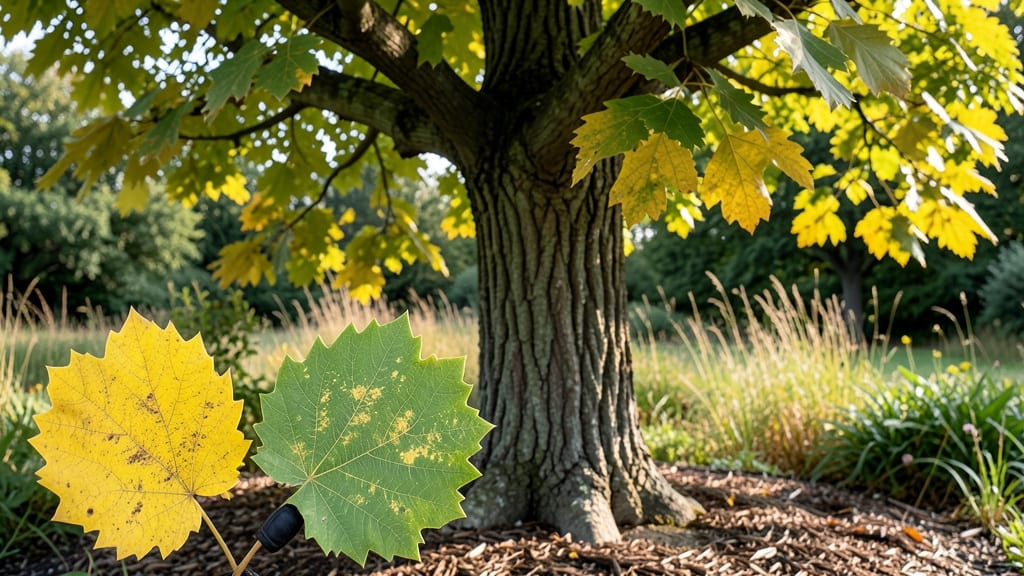
Yellow leaves on elm trees usually indicate root rot or fungal diseases like Dutch elm disease or powdery mildew, often made worse by excessive watering or compacted soil. Act fast by pruning infected branches and improving soil drainage to revive your tree.
When your elm tree's leaves start turning yellow, it's often a cry for help from the roots or fungal invaders. 🌿 Root rot thrives in soggy soil, where oxygen-starved roots can't absorb nutrients, while fungal diseases like Dutch elm disease clog the tree's vascular system, cutting off water flow.
The yellowing is your tree's way of saying, "I'm struggling to feed myself!" I've seen cases where simply amending the soil with compost and sand can work wonders—just make sure to avoid overwatering, which is the #1 enemy of healthy roots.
For fungal issues, early pruning removes the infection source, but you'll need to treat the soil too. Copper fungicides or neem oil can help fight powdery mildew, while Dutch elm disease often requires professional intervention.
The key is catching problems before the tree's canopy turns completely yellow—once that happens, recovery gets much harder. 🌟
💡 In This Article
- How Root Rot and Fungal Diseases Attack Elm Trees
- Step-by-Step Elm Tree Leaf Yellowing Treatment Guide
How root rot and fungal diseases attack elm trees
Root rot begins when elm trees sit in waterlogged soil for extended periods, creating anaerobic conditions that suffocate roots. The culprit is often Phytophthora fungi, which thrive in soggy environments and block nutrient uptake.
As roots decay, they can't transport water and minerals to the canopy, causing leaves to yellow from the bottom up—a classic sign of starvation. The tree's vascular system becomes clogged with fungal mycelium, similar to how a plumbing system gets blocked with debris. 🌱
Fungal diseases like Dutch elm disease take a different approach by invading the tree's xylem vessels. The Ophiostoma novo-ulmi fungus spreads through bark beetle vectors, creating sticky, blackish ooze at infection points. This blocks water transport, causing leaves to yellow and wilt even when soil moisture is adequate.
Powdery mildew, another common offender, coats leaves with a white, powdery film that disrupts photosynthesis, leading to yellowing patches. The key difference? Root rot affects the whole tree uniformly, while fungal diseases often create irregular yellow patterns.
Both conditions weaken the tree's structural integrity over time. Root rot makes roots brittle and prone to snapping, while Dutch elm disease causes branch dieback as infected vessels fail. The yellowing isn't just cosmetic—it's a survival mechanism where the tree sacrifices chlorophyll production to conserve energy.
In advanced cases, you might notice leaves curling or falling prematurely, a clear sign the tree is fighting for its life. 🌿
Diagnosing the specific issue requires examining the roots and bark. For root rot, dig near the base to check for dark, mushy roots with a foul odor. Dutch elm disease reveals itself through dark streaks in the xylem when you cut open infected branches.
Powdery mildew, however, is visible on the leaf surface as a white, talcum-like coating. Each condition demands a different treatment approach, so accurate identification is crucial for effective intervention.
Environmental factors often worsen these problems. Compacted soil reduces oxygen flow to roots, while overwatering creates the perfect breeding ground for Phytophthora. Even mature elm trees can succumb if these conditions persist for months.
The yellowing leaves are essentially the tree's SOS signal—ignoring it allows the disease to spread rapidly through the vascular system or root network. 💫
Understanding these mechanisms helps explain why some treatments work better than others. For instance, copper fungicides target surface fungal growth like powdery mildew, while systemic treatments are needed for vascular diseases like Dutch elm disease.
Root rot, however, often requires complete soil drainage overhauls to break the anaerobic cycle. Each condition has its own biological triggers and progression patterns.