
Size
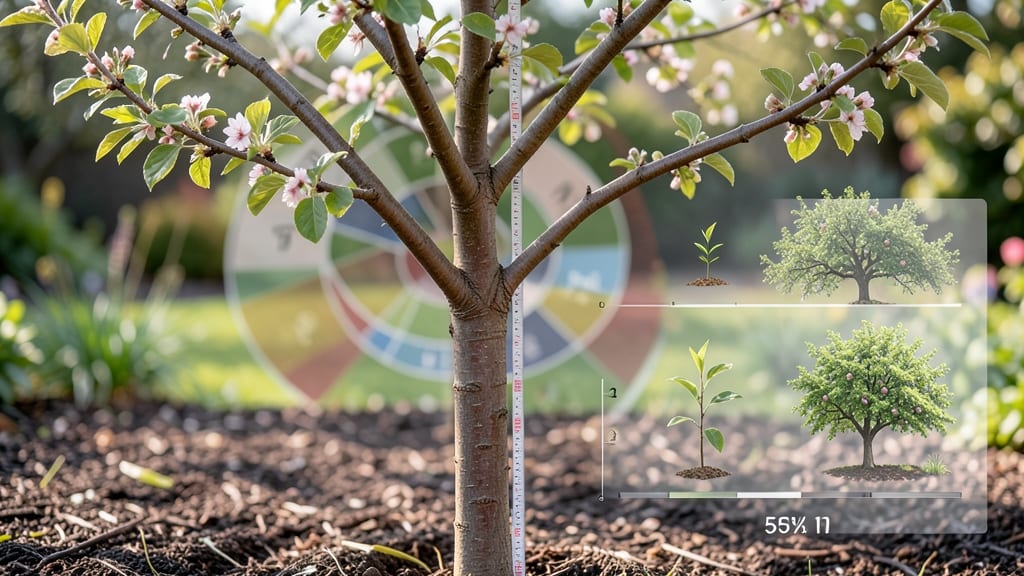
Growing a plum tree typically takes 3 to 5 years before it bears fruit, though dwarf varieties can produce fruit in as little as 2 years, while standard trees may take up to 7 years depending on the specific variety and growing conditions. Climate and care play crucial roles in determining how quickly your tree will mature.
Understanding the growth timeline of a plum tree helps set realistic expectations. 🌱 The earliest-bearing varieties, like 'Santa Rosa' plums, can start producing fruit within 2-3 years when planted in optimal conditions, while larger standard varieties need more time to establish strong root systems.
Climate zones also matter—trees in warmer regions like USDA zones 5-9 often mature faster than those in colder areas. Proper pruning in the first few years encourages stronger branch development, which directly impacts how soon you'll see those sweet plums hanging from your tree.
For home gardeners eager to enjoy fresh fruit sooner, choosing a dwarf variety is a smart move. These compact trees not only bear fruit faster but also require less space, making them perfect for smaller yards or containers.
Just remember that even with fast-growing varieties, the first year is all about root establishment—patience pays off when you see those first blossoms appear in spring.
💡 In This Article
- Factors Affecting Plum Tree Growth Timeline
- Fastest-Fruiting Plum Varieties for Home Gardens
Factors affecting plum tree growth timeline
Plum tree maturity hinges on genetics and environmental conditions, with the biggest difference coming from whether you plant a dwarf or standard variety.
Dwarf trees—like the popular 'Santa Rosa'—can bear fruit in just 2 years because their compact size (typically 8-12 feet tall) allows them to allocate more energy to fruiting instead of vertical growth.
In contrast, standard varieties need 5-7 years to establish a robust root system and canopy structure before producing significant fruit yields. The rootstock also plays a role: semi-dwarf varieties grafted onto 'Myrobalan' rootstock often fruit in 3-4 years.
Climate zones dramatically impact growth speed, particularly through temperature and daylight exposure. Plums thrive in USDA zones 5-9, where winter chilling hours (typically 300-1,000 hours below 45°F) trigger flowering.
Trees in warmer zones like 8-9 may fruit faster but require careful winter protection, while those in colder zones (5-6) need more time to harden off. Soil quality matters too—plums prefer well-draining, slightly acidic soil (pH 6.0-6.5) rich in organic matter.
Poor soil slows root development by 20-30%, delaying fruiting by a full year or more.
Watering practices create another critical variable. Young plum trees need 1-2 inches of water weekly during their first two years, with deeper watering (6-12 inches into soil) encouraging root expansion. Overwatering or inconsistent moisture stresses the tree, diverting energy away from fruit production.
Pruning also accelerates maturity: removing 20-30% of new growth annually improves air circulation and sunlight penetration, which boosts flowering in subsequent years. Without proper pruning, trees may take 1-2 extra years to bear fruit.
Light exposure is often underestimated but equally important. Plum trees need 6-8 hours of direct sunlight daily to photosynthesize efficiently. Shade from buildings or other trees can reduce fruit production by 40% or more.
Even partial shade delays flowering by 6-12 months as the tree prioritizes leaf growth over reproductive development. The combination of these factors explains why some gardeners see fruit in 2 years while others wait 7 years—it's not just the variety, but the entire growing environment.
One often-overlooked factor is the tree's exposure to pollinators. Most plum varieties require cross-pollination, meaning you'll need at least two compatible trees (like 'Stanley' and 'Methley') within 50 feet of each other. Without proper pollination, even a well-cared-for tree may produce 50-70% fewer fruits.
This can create a false impression of slow maturity when the real issue is pollinator access. 🌸 Understanding these interconnected factors helps you troubleshoot delays and optimize your tree's growth.
For example, a 'Santa Rosa' plum in USDA zone 7 with proper soil, water, and sunlight might fruit in 2 years, while the same variety in zone 5 with poor drainage could take 5 years.
The difference comes down to how well you've optimized each of these variables. Paying attention to these details transforms guesswork into a predictable timeline for your home orchard.
Finally, remember that early fruiting doesn't mean peak production. While dwarf varieties may bear fruit sooner, their full potential often takes 3-5 more years to reach. Standard varieties, though slower to start, typically produce larger yields over their 20-30 year lifespan.
Balancing these factors ensures you're setting up your plum tree for both early rewards and long-term success. 🌿