
Blooming
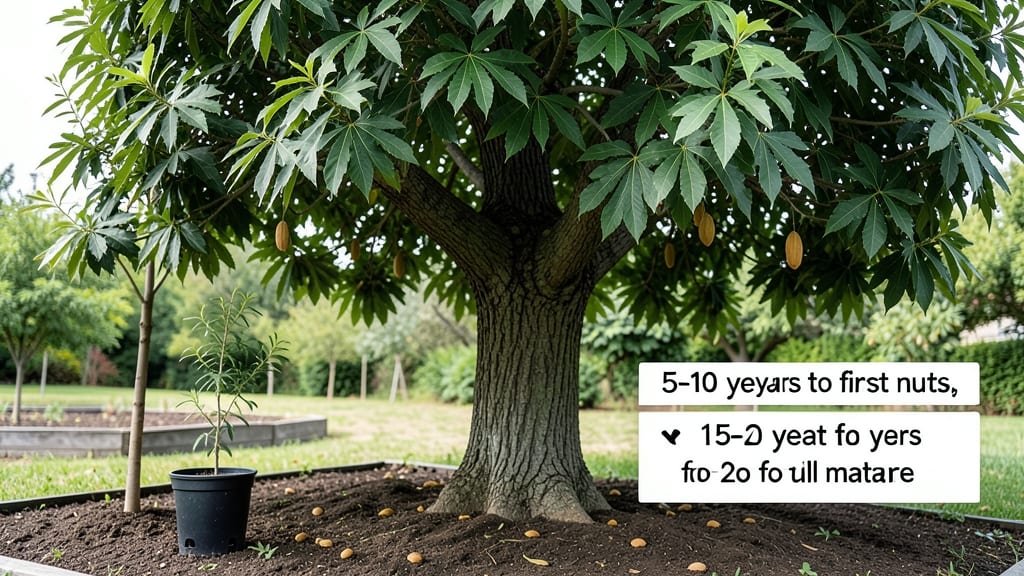
A mature pecan tree takes 15 to 20 years to fully develop, but the journey starts much earlier with 5 to 10 years before your first harvest.
If you're dreaming of a backyard filled with homegrown pecans, patience is key—pecan trees take years to reach full maturity, but the wait is worth it for those rich, buttery nuts. Understanding the timeline helps you plan for success, whether you're planting a single tree or an entire orchard.
The first few years focus on establishing a strong root system and trunk, while later stages prioritize canopy growth and nut production. Varieties like 'Desirable' or 'Elliot' may bear fruit sooner, but climate and care play a huge role in speeding up or slowing down the process.
Below, I break down the key stages, how to recognize progress, and what you can do to ensure your 🌳 pecan tree matures faster—without sacrificing quality.
Pecan tree maturation timeline by variety: from seedling to nut producer
Pecan trees are among the most rewarding but patient investments for any gardener. While they can produce first harvests in 5–10 years, reaching full maturity (15–25 years) is when they truly shine.
The timeline varies dramatically by variety, climate, and care, so knowing these details helps you set realistic expectations. For example, the 'Desirable' variety often bears nuts earlier than 'Cape Fear', but both require decades to reach peak production.
Understanding these differences is crucial because early-bearing varieties like 'Elliot' may produce small yields at 5 years, while late-bearing types like 'Pawnee' might wait until 10+ years. Climate also plays a role—trees in warmer USDA Zones (7–9) mature faster than those in cooler Zones (6).
Proper soil, water, and pruning can further accelerate or delay maturation, making early planning essential.
| Variety | First Nut Production (Years) | Full Maturity (Years) | Climate Adaptability | Notes |
|---|---|---|---|---|
| Desirable | 5–7 | 15–20 | Zones 6–9 | Early bearer; high yield; needs cross-pollination |
| Elliot | 6–8 | 18–22 | Zones 7–9 | Self-pollinating; disease-resistant; large nuts |
| Cape Fear | 8–10 | 20–25 | Zones 7–10 | Late bearer; heat-tolerant; needs pollinator |
| Pawnee | 7–9 | 18–22 | Zones 6–8 | Drought-resistant; self-fertile; smaller nuts |
| Western Schley | 5–6 | 14–18 | Zones 6–9 | Fastest early producer; requires pollinator |
The 'Desirable' variety is a favorite among gardeners because it starts producing nuts as early as 5 years old and reaches full maturity by 15–20 years. This makes it ideal for those with limited patience but still want to enjoy homegrown pecans sooner.
However, it requires cross-pollination, so planting a second compatible variety (like 'Elliot') nearby is essential for optimal yields.
If you're in a warmer climate (Zones 7–10), varieties like 'Cape Fear' thrive but may take 8–10 years to produce their first nuts. While this seems slow, the trade-off is larger, high-quality nuts and better heat tolerance.
In contrast, 'Pawnee' is a drought-resistant option for cooler Zones (6–8), producing nuts at 7–9 years and maturing by 18–22 years.
One common misconception is that pecan trees never produce nuts if they don’t bear fruit within the first 5 years. However, some varieties like 'Western Schley' can produce nuts as early as 5 years, though yields will be smaller initially.
Patience is key—trees need time to establish a strong root system and develop the energy required for nut production.
Climate significantly impacts maturation speed. Trees in Southern states (Zones 8–10) often mature 2–3 years faster than those in Northern regions (Zones 6–7). For example, a 'Desirable' tree in Texas might produce nuts at 4–5 years, while the same tree in Ohio could take 6–7 years.
This is why choosing the right variety for your USDA Zone is critical for success.
Proper care can also accelerate maturation. Providing well-draining soil, consistent watering, and annual pruning ensures the tree allocates energy toward growth and nut production rather than repairing damage.
For instance, deep watering (15–20 gallons per tree) during the first 3 years helps establish a robust root system, which directly impacts early fruiting.
For gardeners in urban or small spaces, dwarf varieties like 'Green River' (though not on the table) can produce nuts in 6–8 years while staying under 20 feet tall.
However, these still require 15–20 years to reach full maturity. If space isn’t an issue, planting a standard-sized tree ensures higher yields over
Key growth stages of a pecan tree: what to expect year by year
Watching a pecan tree grow from a tiny seedling to a towering nut producer is one of the most rewarding experiences for any gardener. Each year brings new milestones, from the first delicate leaves to the heavy harvest of buttery pecans.
Understanding these stages helps you provide the right care at the right time, ensuring your tree thrives and reaches its full potential.
Pecan trees are slow growers, especially in their early years, but with proper soil conditions, watering schedules, and temperature management, you can optimize their development.
For example, a tree planted in well-draining soil with full sun exposure may reach its first nut production as early as 5 years, while others might take closer to 10 years depending on the variety and climate.
🌱 Key Growth Stages of a Pecan Tree
- Year 1-2: Seedling to 2-4 ft tall. Focus on establishing roots and early leaf development.
- Year 3-5: Rapid growth to 6-10 ft. First signs of flower buds appear (though no nuts yet).
- Year 6-10: Tree reaches 12-18 ft and begins flowering and nut production (sparse harvest).
- Year 11-15: Mature height of 40-60 ft. Full nut-bearing capacity with consistent harvests.
- Year 15-25: Peak maturity at 60-100 ft. Maximum nut production and tree stability.
Note: Environmental factors like soil pH (6.0-7.0), water availability, and winter chill hours can accelerate or delay these stages.
During the first 2 years, your pecan tree will focus on developing a strong root system. This is why deep watering—especially during dry spells—is critical. Avoid overwatering, as soggy soil can lead to root rot, a common issue for young trees.
Mulching around the base helps retain moisture and regulate soil temperature, creating ideal conditions for root growth.
The 3rd to 5th years mark a turning point when your tree starts investing energy into above-ground growth. You’ll notice longer branches and the first appearance of flower buds, though these may not yet produce viable nuts.
This is also when pruning becomes important to shape the tree and remove any weak or crossing branches that could hinder future growth or nut production.
By years 6-10, your pecan tree enters its reproductive phase, producing its first harvestable nuts. However, yields will be modest, and the nuts may not yet be as flavorful as those from a fully mature tree.
This stage is ideal for monitoring pollination success—many pecan varieties require cross-pollination, so planting at least two compatible trees ensures better fruit set. Watch for pecan scab or aphid infestations, which can stress young trees.
Once your tree reaches 15-25 years, it’s considered fully mature, capable of producing hundreds of pounds of nuts annually. At this stage, the tree’s canopy spreads wide, and its roots extend deep into the soil.
Proper care—like annual deep watering, seasonal pruning, and soil testing—will maintain its health and productivity for decades. Some pecan trees live for over 100 years, continuing to bear nuts well into old age with the right conditions.