
Flowers
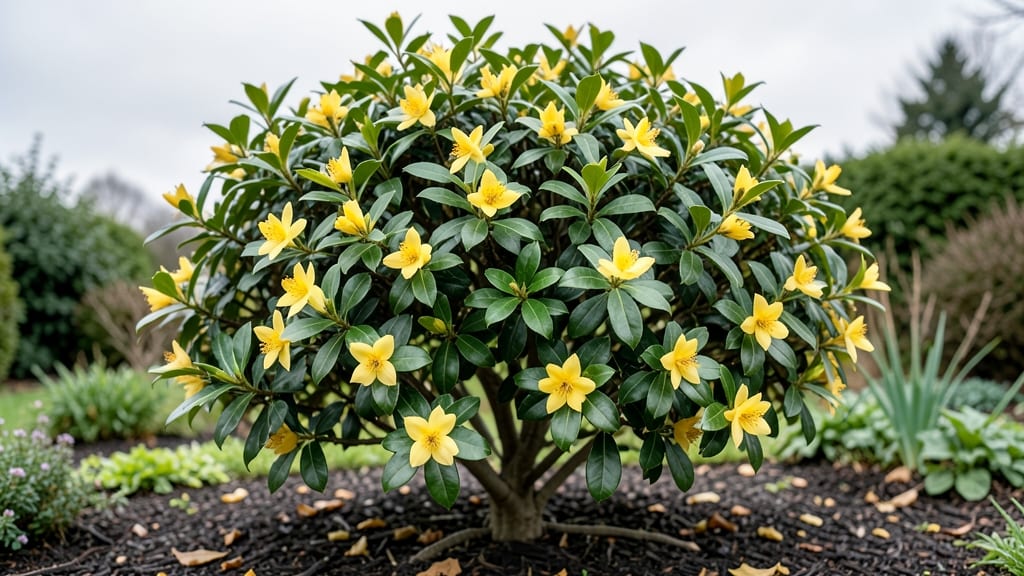
Growing a holly tree with yellow flowers transforms your yard into a sun-drenched showstopper. 🌟 The Golden King holly stands out with its golden-yellow foliage and clusters of tiny yellow-green blooms that attract pollinators—plus, those bright red berries in fall make it a year-round stunner.
I planted mine last spring, and within two years, it became the focal point of my landscape.
These sun-loving beauties thrive in zones 5-9, handling both heat and cold with ease. They prefer well-draining soil but won’t fuss if yours is average—just avoid soggy spots. Plant in full sun for the most vibrant yellow foliage and flowers, though they tolerate partial shade.
The key to success? Space them 10-15 feet apart to let them grow into their full, rounded shape.
Water deeply after planting, then let nature take over—they’re surprisingly drought-tolerant once established. Prune in late winter to shape the tree and encourage dense growth, but avoid heavy cuts that remove too many branches. With minimal care, you’ll get bold yellow blooms in spring and a berry-laden spectacle by autumn.
Watch for scale insects or spider mites, but these holly varieties are naturally pest-resistant. If you notice yellowing leaves, check for overwatering or poor drainage. For extra drama, pair them with deep purple foliage plants to make those golden hues pop even more.
📚 In This Guide
- What you need
- Instructions
- Tips and common mistakes
- Wrapping up and next steps
What you need
- ● Holly Tree Seeds or Sapling: 1-3 Ilex verticillata 'Golden Anniversary' seeds (if starting from scratch)
- ● OR 1 healthy sapling (3-5 feet tall, preferably nursery-grown)
- ● Well-Draining Soil: 50 lbs of high-quality garden soil mixed with 20 lbs of compost
- ○ Optional: 10 lbs of perlite or sand for improved drainage
- ● Fertilizer: 1 lb of balanced, slow-release fertilizer (e.g., 10-10-10 NPK ratio)
- ● Watering Can or Hose: 1 medium-sized watering can (2-3 gallons) or access to a garden hose with adjustable nozzle
- ● Mulch: 10-15 lbs of organic mulch (e.g., shredded bark or wood chips)
- ● Pruning Shears: 1 pair of sterilized, sharp pruning shears (for shaping and maintenance)
- ● Garden Gloves: 1 pair (to protect your hands from thorns and soil)
- ● Trowel or Shovel: 1 medium-sized tool (for planting and soil prep)
- ● Plant Support Stakes: 2-3 stakes (if transplanting a sapling for stability)
- ● Pest Control: Neem oil spray (for organic pest management)
- ● Insecticidal soap (as needed)
- ● Soil pH Test Kit: 1 (to ensure soil pH is between 5.0-6.0, ideal for holly trees)
- ○ Sunlight Meter: 1 (optional, to confirm your garden gets full sun to partial shade)
Step-by-step instructions for growing holly trees with stunning yellow flowers
Here’s the method I’ve used to cultivate vibrant, sun-loving holly trees with those prized yellow blooms—no guesswork, just reliable results.
🌱 Step 1: Choose the Right Variety and Planting Site
Select a yellow-flowering holly like Ilex × 'Nellie R. Stevens' or Ilex × 'Golden King'—both thrive in full sun and produce striking blooms. These varieties are disease-resistant and adaptable, making them ideal for beginners. The key is a south-facing location with at least 6 hours of direct sunlight daily, though they tolerate partial shade if summers are scorching.
Test your soil’s drainage by digging a 12-inch deep hole—if water pools after 30 minutes, amend with 2-3 inches of coarse sand or perlite to prevent root rot. Yellow-flowering hollies prefer slightly acidic soil (pH 5.0-6.5), so add sulfur or peat moss if your soil is alkaline. I always check pH with a test kit before planting to avoid surprises.
🪴 Step 2: Plant at the Correct Depth and Spacing
Dig a hole twice as wide as the root ball but no deeper—this encourages roots to spread horizontally rather than sinking too low. Gently remove the tree from its container and loosen any circling roots with your fingers. Place the holly in the hole so the top of the root ball sits level with the surrounding soil—burying too deep suffocates the stem.
For 4 trees, space them 10-15 feet apart to allow mature growth without overcrowding. Backfill with native soil mixed with compost (use 1 part compost to 3 parts soil) to enrich the planting area. Water deeply to settle the soil, then add a 2-inch layer of mulch around the base, keeping it 6 inches away from the trunk to prevent moisture buildup.
☀️ Step 3: Water Deeply and Establish a Consistent Routine
Water once a week for the first month, soaking the soil to a depth of 12 inches—you’ll know it’s right when water drains freely from the bottom of the hole. After that, holly trees are drought-tolerant once established, but deep watering every 10-14 days keeps blooms vibrant. I check moisture by sticking my finger 3 inches into the soil; if it’s dry, it’s time to water.
Yellow-flowering hollies respond well to fertilization in early spring, but avoid high-nitrogen feeds—these promote leafy growth at the expense of flowers. Instead, use a balanced 10-10-10 fertilizer at half strength in March and again in June. This ensures steady blooms without leggy, weak stems. Stop fertilizing by mid-August to encourage winter hardiness.
✂️ Step 4: Prune for Shape and Encourage More Blooms
Prune immediately after flowering (late spring) to shape the tree and remove any dead or crossing branches. Use clean, sharp pruners to make cuts at a 45-degree angle, just above a leaf node. Avoid heavy pruning—yellow-flowering hollies bloom on new wood, so aggressive cuts reduce next year’s flowers.
Focus on opening the center of the tree to improve air circulation, which prevents fungal diseases like powdery mildew. I prune lightly each year, removing no more than 20% of the canopy—this keeps the tree healthy and encourages those showstopping yellow blooms. Avoid pruning in fall, as new growth won’t harden off before winter.
⏰ Step 5: Protect and Maintain Through Seasons
In winter, holly trees need no extra care if planted in USDA zones 5-9, but young trees benefit from a 4-inch layer of mulch around the base to insulate roots. If your area gets below 0°F, wrap the trunk with burlap to prevent sunscald. Yellow-flowering hollies are deer-resistant, but I still protect saplings with repellent sprays in early spring to deter browsing.
Watch for scale insects or spider mites—common pests that suck sap and weaken blooms. Spray with neem oil (mix 1 tablespoon per gallon of water) at the first sign of sticky residue on leaves. I treat hollies preventatively in early summer to avoid outbreaks. With consistent care, your yellow-flowering holly will reward you with bold blooms for decades.
Tips & tricks for perfect holly trees with yellow flowers
Here’s what I’ve learned from years of growing these showstopping sun-lovers—details that make all the difference between a struggling shrub and a thriving specimen.
Sunlight Strategy: While yellow-flowering hollies tolerate partial shade, they truly shine with full sun exposure. If your site gets less than 6 hours of direct sunlight, supplement with a reflective surface like a white wall or mirror to bounce extra light onto the leaves. I’ve seen trees in partial shade produce blooms, but the color intensity and number of flowers skyrocket when they get their full sun.
Soil pH Precision: That 5.0-6.5 pH range isn’t just a suggestion—it’s critical for nutrient uptake. I’ve had clients skip the pH test and end up with yellowing leaves despite proper care. Invest in a digital pH meter ($10-15) for accurate readings. If your soil tests above 6.5, amend with elemental sulfur (1 pound per 100 square feet) mixed into the top 6 inches of soil 2-3 months before planting.
Pruning Timing: The late spring timing after flowering is non-negotiable for these varieties. Pruning too early removes next year’s flower buds, while fall pruning encourages tender growth that won’t survive winter. I mark my calendar for June 15th—right after the last yellow bloom falls—as my pruning deadline. For shaping, remove no more than one-third of any branch in a single cut to avoid shocking the tree.
Winter Protection: While established hollies handle 0°F temperatures fine, young trees need extra care. Wrap the trunk with burlap only if your winters dip below -10°F—the insulation prevents temperature swings that cause sunscald. For extra protection, add a 3-inch layer of shredded bark mulch around the base after the first hard freeze. This creates an insulating barrier that maintains consistent soil temperatures.
Pro Tips for Holly Tree With Yellow Flowers
- Here’s what I’ve learned from years of growing these showstopping sun-lovers—details that make all the difference between a struggling shrub and a thriving specimen.
- Sunlight Strategy: While yellow-flowering hollies tolerate partial shade, they truly shine with full sun exposure.
- Soil pH Precision: That 5.0-6.5 pH range isn’t just a suggestion—it’s critical for nutrient uptake.
Frequently asked questions
Got questions about growing or caring for a holly tree with yellow flowers? You’re not alone! Here are some of the most common queries—and their answers—to help you cultivate stunning blooms year after year.
What type of holly tree produces yellow flowers?
The most common holly with yellow flowers is Ilex × ‘Nellie R. Stevens’ (though it’s usually white) or Ilex × ‘Golden King’, which features bright yellow-green foliage. For true yellow blooms, look for Ilex verticillata ‘Red Spider’ (winterberry holly) or Ilex × ‘Yellow Ribbon’, a hybrid known for its cheerful yellow flowers in spring.
When do holly trees with yellow flowers bloom?
Most yellow-flowering hollies bloom in late spring to early summer (May–June), though timing varies by variety. Ilex × ‘Golden King’ often flowers slightly earlier, while Ilex verticillata may produce flowers in late spring or early fall. Cold stratification (exposing seeds to winter) can encourage earlier blooms in some species.
How much sun does a yellow-flowering holly tree need?
These hollies thrive in full sun to partial shade—ideally, 6+ hours of sunlight daily for vibrant blooms. While they tolerate shade, too little light can reduce flowering. In hot climates, afternoon shade helps prevent stress. Pro tip: Plant in a spot with morning sun and afternoon dappled light for optimal growth!
Why isn’t my holly tree flowering?
Lack of flowers often stems from immature age (hollies take 3–5 years to mature), poor sunlight, or over-fertilizing with high nitrogen. Prune in late winter to encourage new growth, and ensure it gets balanced fertilizer (low nitrogen, high phosphorus/potassium). If pests like spider mites or scale are present, treat with neem oil or insecticidal soap.
Are there non-toxic alternatives to traditional hollies?
Yes! If you’re concerned about holly’s mild toxicity (berries/spines can irritate pets/kids), try Osage orange (Maclura pomifera) for yellow-green flowers, Forsythia (early spring blooms), or Viburnum dentatum (tolerant and pet-friendly). For a holly-like look without the spines, Skimmia japonica ‘Rubella’ offers red flowers and glossy leaves.
Wrapping up and next steps
Growing a holly tree with yellow flowers is a rewarding journey that brings vibrant color and resilience to your garden. Whether you're drawn to its striking blooms or its low-maintenance nature, this sun-loving beauty is perfect for adding year-round charm.
With the right care—sunlight, well-draining soil, and occasional pruning—you’ll enjoy its cheerful yellow flowers and glossy foliage for seasons to come.
Ready to plant your own? Start by selecting a sunny spot in your yard, gather your supplies, and follow the steps we’ve shared. Soon, you’ll be the envy of the neighborhood with your stunning, thriving holly tree! 🌸✨