
Pruning
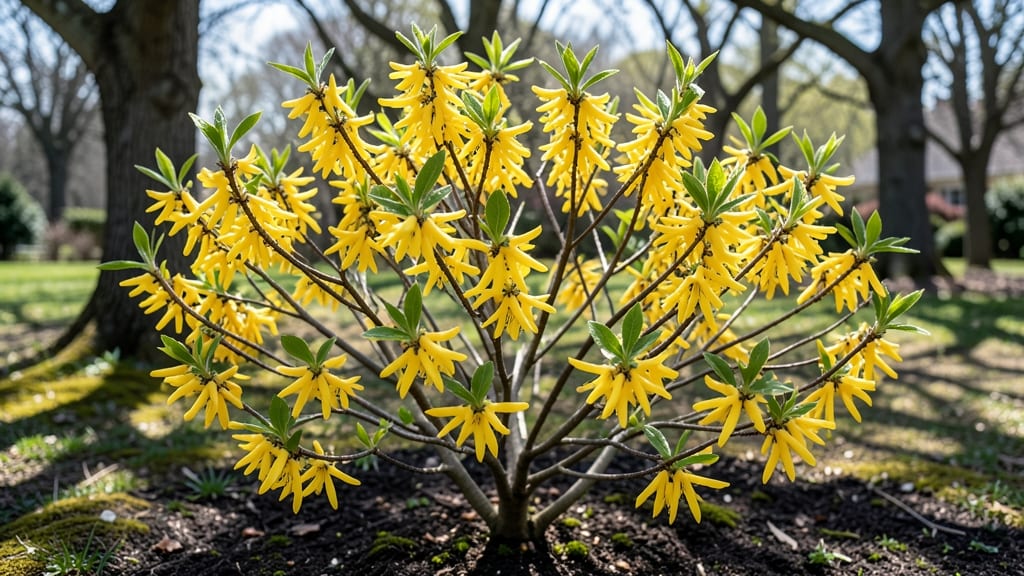
Your forsythia’s tree form can transform from wild tangle to a year-round architectural centerpiece with just a few cuts. 🌿 I’ve trained mine to look like a graceful tree instead of a sprawling shrub—and the difference in curb appeal (and sunlight access) is night-and-day.
The secret lies in understanding its three core forms: upright, multi-stemmed, or even weeping, each requiring a different pruning rhythm.
Start by choosing your vision: a single-trunk tree needs aggressive early pruning to establish dominance, while multi-stemmed shrubs thrive when you let 3-5 main branches compete naturally. My weeping selection (a rare find at the nursery) gets pruned to encourage long, graceful branches—no shearing required.
The key is timing: prune right after flowering to avoid sacrificing next year’s vibrant yellow blooms.
Once shaped, forsythia becomes the backbone of your garden’s structure. Place it where it can anchor borders or frame entryways, its bold winter silhouette contrasting beautifully with evergreens.
Pair it with spring bulbs at its feet—their colors pop against its fresh new growth, and the combination keeps your garden lively from February through May.
Pro tip: Mark your pruning calendar with two dates—right after blooms fade and again in late summer—to maintain that perfect form without stressing the plant. Even a black thumb can nail this; forsythia’s forgiving nature makes it the ultimate low-maintenance statement plant once you get the rhythm down.
📚 In This Guide
- What you need
- Instructions
- Tips and common mistakes
- Wrapping up and next steps
What you need
- ● Pruning shears: Bypass pruners (for clean cuts on small branches, 5-7 inches blade length).
- ● Loppers: 1 pair (for thicker branches, up to 2 inches in diameter).
- ● Pruning saw: 1 (for branches over 2 inches thick, 10-12 inch blade).
- ● Gloves: Heavy-duty gardening gloves (to protect from thorns and debris).
- ● Disinfectant: 70% isopropyl alcohol or pruning sealant (to prevent disease spread).
- ● Rake or broom: 1 (for clearing fallen branches and debris post-pruning).
- ● Pruning paint: (For sealing large cuts over ½ inch thick).
- ● Extension pole: (For hard-to-reach branches, 4-6 feet long).
- ● Ladder: (If your forsythia is over 8 feet tall).
- ● Notebook & pen: (To sketch your tree’s form before pruning).
- ● Safety glasses: (To shield eyes from debris).
- ● Know your forsythia’s current form—take photos or sketch its natural shape.
- ● Check the weather forecast—prune on a dry, overcast day to avoid stressing the tree.
- ● Gather local pruning guidelines—some regions have specific rules for ornamental trees.
- ● Have a clear vision of your desired shape (e.g., rounded, vase-like, or multi-stemmed).
Instructions for year-round forsythia tree form control
Mastering forsythia shape takes seasonal timing and precision cuts—here's how to sculpt it beautifully.
✂️ Step 1: Late Winter Pruning for Structure
Prune immediately after flowering but before new growth begins, ideally in late February to early March. This is when the plant is dormant but buds are already swelling. I always remove 1/3 of the oldest stems at ground level—these are the ones that flowered last year and are now woody. You'll see them as thicker, darker branches compared to the newer growth.
For the remaining stems, cut back to a strong outward-facing bud. This encourages growth in the direction you want. Use sharp loppers to make clean cuts at a 45-degree angle about 1/4 inch above the bud. Avoid leaving stubs—they invite disease. If you're shaping a multi-stemmed shrub, remove any crossing branches first to improve airflow.
✂️ Step 2: Summer Light Pruning for Density
In June or July, when the forsythia has finished flowering but before new growth hardens, do a light pruning to maintain shape and encourage bushiness. Look for stems that are growing too upright or leggy—these are the ones that need attention. I typically trim back about 1/3 of the new growth on these stems to promote branching.
This is also when you should remove any suckers that appear at the base. These are vigorous shoots that drain energy from your main plant. Cut them off at ground level immediately—they'll grow back if left alone. For a more natural look, you can lightly pinch back the tips of some branches to encourage a fuller form. Just avoid heavy pruning now—you want to preserve this year's flower buds.
✂️ Step 3: Fall Cleanup for Health
After the forsythia has dropped all its leaves in late November, do a final cleanup. Remove any dead, diseased, or weak stems completely. You'll recognize these by their brown or hollow appearance. Also take out any branches that are growing in directions that disrupt your desired shape—this is your chance to make final adjustments before winter.
For any remaining stems that need shaping, make your cuts just above a bud that's facing outward. The goal here is to create an open center that allows light and air to circulate. I always step back to view the plant from all angles before making final cuts—this helps me see the overall shape more clearly. Never prune more than 25% of the plant's total volume in any one season.
☀️ Step 4: Year-Round Monitoring for Timely Adjustments
Check your forsythia monthly throughout the year for any branches that are growing out of balance. In spring, watch for water sprouts—these are fast-growing vertical shoots that appear at branch junctions or the base. Remove them immediately as they appear, as they divert energy from flower production. I use my fingers to pinch them off when they're still small, which is less damaging than cutting.
During winter dormancy, avoid pruning unless absolutely necessary—this is when the plant is storing energy for next year's growth. If you must prune in winter, do so on a mild day when temperatures are above 35°F. The key to year-round success is patience. Forsythias respond well to gradual shaping over time rather than dramatic changes in a single season.
Tips & tricks for perfect forsythia tree form
These precision techniques will help you transform your forsythia into a stunning landscape feature with minimal stress.
Seasonal Timing is Everything: The late February to early March window for Step 1 is critical—this is when forsythias are dormant but buds are already swelling. I've learned the hard way that pruning too early (when buds aren't swollen) or too late (when new growth starts) can reduce next year's flowering. Mark your calendar now: after forsythias finish blooming but before you see any green shoots is your exact target time. That's when you remove that crucial 1/3 of oldest stems to maintain vigor.
Cutting Technique Matters More Than You Think: That 45-degree angle in Step 1 isn't just for looks—it prevents water from pooling on the cut and reduces disease risk. I always test my loppers before pruning by making a clean cut on a small twig. If you're working with larger branches, consider using a pruning saw for cleaner cuts that heal faster. Remember, every cut should be about 1/4 inch above an outward-facing bud—this is what creates that beautiful, open structure we're aiming for.
Year-Round Maintenance Prevents Overcorrection: The monthly checks in Step 4 are where most people fail. I've seen forsythias go from beautiful to chaotic in just one growing season because homeowners ignored those small water sprouts. Pinching them off with your fingers when they're pencil-thin is less damaging than cutting and doesn't leave unsightly stubs. Think of this as your ongoing conversation with the plant—small adjustments keep it thriving without dramatic changes that shock the system.
Winter Pruning Exception: That 35°F minimum temperature in Step 4 isn't arbitrary—it's when forsythia sap begins to flow. Pruning in colder weather can cause excessive bleeding and stress. If you must prune in winter, do it on the warmest day possible and limit yourself to removing only dead or diseased wood. The plant's energy reserves are precious during dormancy, so be judicious with your cuts.
Pro Tips for Forsythia Tree Form
- These precision techniques will help you transform your forsythia into a stunning landscape feature with minimal stress.
- Seasonal Timing is Everything: The late February to early March window for Step 1 is critical—this is when forsythias are dormant but buds are already swelling.
- Cutting Technique Matters More Than You Think: That 45-degree angle in Step 1 isn't just for looks—it prevents water from pooling on the cut and reduces disease risk.
Frequently asked questions
Got questions about shaping your forsythia tree? Here are some to help you master its form year-round!
When is the best time to prune forsythia for optimal blooms?
Prune forsythia right after flowering (late April to early May) to encourage next year’s blooms. Avoid heavy pruning in late summer or fall, as it can reduce flowering. Light shaping can be done in early spring before buds swell, but never cut back into old wood—it won’t produce new flowers.
Can I prune forsythia into a specific shape, like a hedge or tree form?
Forsythias are highly adaptable. For a tree form, prune to a central leader and remove competing branches. For a hedge, trim regularly to maintain height and density. Just remember: forsythias bloom on old wood, so avoid over-pruning in winter.
What should I do if my forsythia isn’t blooming after pruning?
If your forsythia skips blooms, it’s likely due to over-pruning or cutting back into old wood. Focus on light shaping and avoid removing more than 1/3 of the plant at once. Fertilize in early spring with a balanced 10-10-10 mix to encourage new growth and flowering.
Are there alternatives to forsythia for a similar look but easier pruning?
If forsythia’s pruning demands feel high, consider weigela (similar blooms, more flexible pruning) or deutzia (lighter pruning needs). Fothergilla is another great option with fragrant spring blooms and a more forgiving form. All three thrive in similar conditions!
How often should I prune forsythia for long-term health?
Aim for annual light pruning after flowering to maintain shape and remove dead/diseased branches. Every 2-3 years, do a moderate pruning to thin out crowded branches and improve airflow. Avoid drastic cuts—forsythias respond best to gradual shaping.
Wrapping up and next steps
Mastering the forsythia tree form is all about patience, timing, and a little creativity—your garden will thank you with vibrant blooms and a polished look year-round! 🌿 Whether you’re shaping it into a neat hedge, an artistic topiary, or a free-form beauty, strategic pruning keeps it healthy and stunning. Start small, observe how it grows, and adjust your approach each season.
Ready to take the next step? Grab your pruners, pick a sunny day, and give your forsythia the care it deserves—your future spring blooms will be worth every snip! 🌸