
Trees
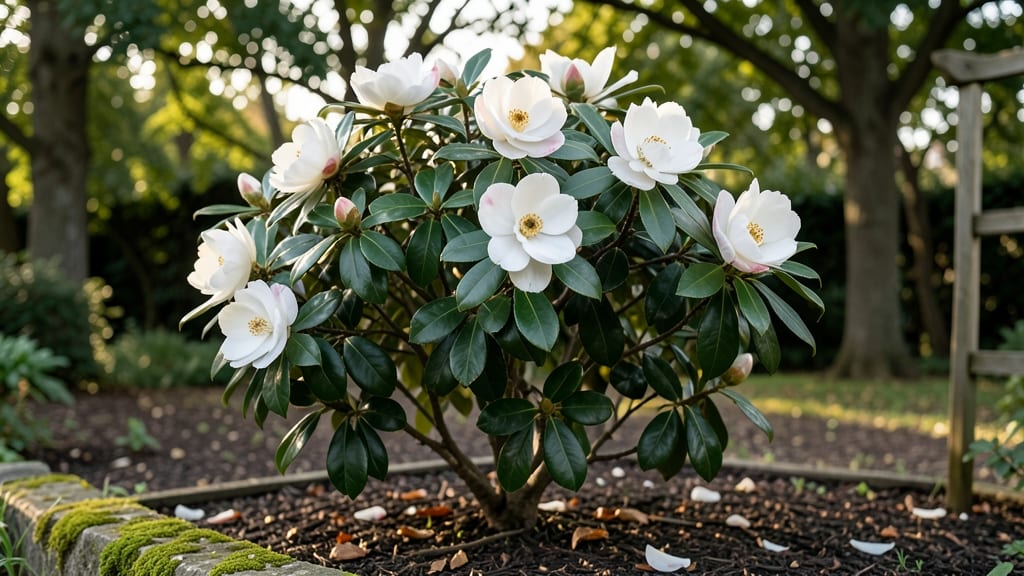
Growing a white camellia tree that thrives through winter starts with the right variety—one that resists cold snaps while delivering those elegant, waxy blooms. 🌸 I learned the hard way that not all camellias handle frost, but the right cold-hardy selection can reward you with year-round interest, from glossy evergreen leaves in summer to stunning winter flowers when most gardens are bare.
The secret lies in soil, sunlight, and timing: acidic, well-draining soil mimics their native habitat, while morning sun and afternoon shade protect delicate blooms.
Prune lightly after flowering to shape the tree without sacrificing next year’s buds, and watch as your camellia becomes the standout focal point of your landscape—even in the coldest months.
📚 In This Guide
- What you need
- Instructions
- Tips and common mistakes
- Wrapping up and next steps
What you need
- ● Camellia tree (white variety): 1 bare-root sapling (dormant season) or
- ● 1 container-grown plant (3–5 gallons, 18–24" tall) 🌿
- ● Well-draining soil: 3–5 bags (1 cubic foot each) of acidic potting mix (pH 5.0–6.0) or peat moss + pine bark blend.
- ● Organic mulch: 2–3 cubic feet of pine needles, wood chips, or cypress mulch (avoid cedar—it’s toxic!).
- ● Fertilizer: 1 lb. acid-loving plant fertilizer (e.g., 8-3-9 or 10-10-10 with micronutrients) or
- ● 1 lb. slow-release organic fertilizer (e.g., fish emulsion or composted pine bark).
- ● Garden tools: 1 trowel or transplant spade
- ● 1 pruning shears (sterilized)
- ● 1 watering can (2–3 gallons) or hose with gentle spray nozzle
- ○ Support (optional but recommended for young trees): 1 tree stake (4–5 ft. tall) and
- ● 2–3 soft garden ties (to avoid girdling).
- ● Location: Partial shade (3–6 hours of dappled sunlight) in USDA Zones 7–9. Test your soil’s pH with a kit!
- ● Water source: Consistent access to water (camellias hate soggy roots but need regular moisture).
- ○ Safety gear (optional): Garden gloves (to protect from thorns)
- ● Sunscreen + hat (if planting in hot weather).
- ● Epsom salt: 1 lb. (for magnesium boost, especially in clay soil).
- ● Mulch ring: Landscape fabric (to prevent weeds from stealing nutrients).
- ● Tree guard: Plastic wrap or wire mesh (to deter deer/browsing animals).
- ● Growth regulator: 1 bottle of paclobutrazol (for compact, bushier growth).
Step-by-Step guide to planting and caring for cold-hardy white camellias
Here's how to establish a stunning white camellia that thrives in cooler climates—with fewer surprises than most gardeners expect.
🌱 Step 1: Select the Right Location and Prepare the Soil
White camellias need partial shade—think morning sun with afternoon shade—to prevent leaf scorch in hotter climates. I always choose a spot where they’ll receive 3-6 hours of filtered sunlight daily, especially in regions with summer heat. Avoid full sun, which can bleach the delicate blooms and stress the plant.
Test your soil first—camellias prefer acidic conditions (pH 5.0-6.5). If your soil tests higher, amend it with 2-3 inches of peat moss or sulfur-based soil conditioner mixed into the top 12 inches of soil. The roots of these trees are shallow, so focus on improving the top layer where they’ll thrive. I like to work in a 5-gallon bucket of organic compost into the planting hole to give them a nutrient boost right away.
🪴 Step 2: Plant at the Correct Depth and Stake for Support
Dig a hole twice as wide as the root ball but no deeper—camellias hate having their roots buried too deeply, which can cause root rot. Place the tree in the hole so the top of the root ball sits just above soil level. This ensures proper drainage and prevents waterlogging, which is deadly for camellias.
Fill the hole with the amended soil, pressing gently around the roots to remove air pockets. Water deeply to settle the soil, then add a 3-foot wooden stake positioned 3-4 inches from the trunk (never touching it). Secure the tree with soft garden ties in a loose figure-eight pattern—too tight now will strangle the trunk as it grows. I always double-check that the ties aren’t cutting into the bark, even slightly.
☀️ Step 3: Water Deeply and Mulch to Retain Moisture
After planting, water slowly and deeply until the soil 12 inches down is thoroughly moistened. Camellias despise soggy roots but also can’t handle drought—aim for 1-1.5 inches of water weekly, adjusting for rain. In the first year, I water twice weekly during dry spells to help the roots establish without stress.
Spread 3-4 inches of pine bark mulch over the soil, keeping it 6 inches away from the trunk to prevent rot. Mulch helps retain moisture and keeps roots cool in summer. Replenish mulch annually in early spring—this is the secret to keeping your camellia blooming reliably year after year, even in cooler climates.
✂️ Step 4: Prune for Shape and Encourage Future Blooms
Prune your white camellia right after flowering (late spring) to shape the tree and encourage next year’s blooms. Remove dead, crossing, or weak branches first—these compete with healthy growth. For shaping, cut back overly long branches by 1/3 to maintain a natural, balanced form. Avoid heavy pruning in fall or winter, as this can reduce next season’s flower production.
I always use clean, sharp pruners to make cuts just above a bud or branch junction. Never leave stubs—this invites disease. After pruning, give the tree a light fertilizer (acid-loving plant formula) to support new growth. This is also the time to check for pests like scale or spider mites—treat early if you spot any, as camellias are sensitive to infestations.
⏰ Step 5: Winter Care for Cold-Hardy Varieties
Even cold-hardy white camellias need protection in harsh winters. Once temperatures drop below 20°F, wrap the lower trunk and roots with burlap or tree wrap to prevent frost cracks. I also add a 4-6 inch layer of mulch over the root zone for extra insulation—this keeps the soil temperature stable and protects delicate roots.
Water sparingly in winter—just enough to prevent the soil from drying out completely. Overwatering in cold weather can suffocate roots. If your region gets heavy snow, gently brush it off the branches to prevent breakage. With proper winter care, your camellia will reward you with vibrant white blooms in late winter or early spring, long before other garden plants wake up.
Tips & tricks for perfect cold-hardy white camellia growth
Here's what I've learned after years of growing these elegant trees—common pitfalls and how to avoid them.
Location Precision: In Step 1, when choosing your spot, pay attention to how sunlight shifts throughout the day. I've found that east-facing locations with morning sun and afternoon shade work best in cooler climates. If your yard has afternoon shade from nearby trees or structures, that's ideal—just make sure the morning sun reaches the tree for at least 3 hours. The delicate white blooms need that gentle morning light to develop properly, but they'll appreciate the afternoon respite from intense rays.
Soil Testing Tip: Before amending your soil in Step 1, get a proper soil test kit from your local garden center. The pH range of 5.0-6.5 is crucial—camellias won't thrive outside this acidic range. I once planted mine in soil that tested at 7.0, and despite all other care, the tree struggled for years. If you're unsure about your soil's acidity, consider planting in a raised bed where you can have complete control over the soil composition.
Staking Strategy: When you're planting in Step 2, don't rush the staking process. The 3-foot wooden stake should be positioned just right—3-4 inches from the trunk, but never touching it. I've seen many gardeners make the mistake of placing stakes too close, which can actually damage the trunk as it grows. Use soft garden ties and create a loose figure-eight pattern around the trunk and stake. Check these ties every few weeks during the first year to ensure they're not tightening as the tree grows.
Winter Protection Insight: For Step 5, when protecting your camellia from winter's chill, remember that the key is insulation—not just covering the trunk. The roots are equally vulnerable to temperature fluctuations. I've found that adding that extra 4-6 inch layer of mulch over the root zone makes all the difference. This creates a protective barrier that maintains stable soil temperatures, even when air temperatures drop below 20°F. Don't forget to water sparingly during winter—just enough to prevent complete drying out.
Pro Tips for Camellia Tree White
- Here's what I've learned after years of growing these elegant trees—common pitfalls and how to avoid them.
- Location Precision: In Step 1, when choosing your spot, pay attention to how sunlight shifts throughout the day.
- Soil Testing Tip: Before amending your soil in Step 1, get a proper soil test kit from your local garden center.
Frequently asked questions
1. How cold-hardy is the white camellia tree, and can it survive winter?
The Camellia tree white varieties like Camellia sasanqua are among the hardiest, typically tolerating temperatures down to 10–15°F (-12 to -9°C). However, younger trees or tender blooms may need winter protection (e.g., burlap wraps or mulch) in harsh climates. Check local USDA zones—most thrive in Zones 7–9.
2. When do white camellias bloom, and how can I encourage more flowers?
White camellias bloom in late fall to early winter (October–December), with some varieties reblooming in spring. To maximize flowers:
- Prune after blooming to avoid cutting next year’s buds.
- Fertilize in early spring with acidic, slow-release fertilizer (e.g., 8-3-9).
- Ensure 6+ hours of sunlight—partial shade helps in hot climates.
3. Why aren’t my white camellia leaves turning green, and how do I fix yellowing?
Yellowing leaves often signal nutrient deficiencies or pH issues. Test your soil—camellias prefer acidic soil (pH 5.0–6.0). If deficient:
- Add peat moss or sulfur to lower pH.
- Use a chelated iron supplement for chlorosis (yellowing between veins).
- Water deeply but avoid soggy roots—root rot causes yellowing too!
4. Can I grow a white camellia in a container, and what’s the best pot size?
Yes! Dwarf varieties like Camellia ‘Yuletide’ thrive in containers. Choose a pot at least 18–24 inches wide with drainage holes. Use a well-draining, acidic mix (e.g., 60% peat moss, 30% pine bark, 10% perlite). Move pots to partial shade in summer and bright light in winter to encourage blooms.
5. What pests or diseases should I watch for in white camellias?
Common issues include:
- Camellia leaf gall (caused by fungus)—remove infected leaves and apply copper fungicide.
- Scale insects (white bumps on stems)—spray with neem oil or horticultural oil.
- Spider mites (in dry heat)—mist leaves and use insecticidal soap.
Bonus: Are there fragrant white camellia varieties?
Try Camellia sasanqua ‘Bonanza’ (sweetly fragrant) or Camellia japonica ‘White Rose’ (light floral scent). For strongest fragrance, plant near patios or windows—just beware of pollen allergies (some varieties are low-allergen).
Wrapping up and next steps
Growing a white camellia tree is a rewarding journey that brings year-round elegance to your landscape—whether you’re drawn to its glossy evergreen leaves or stunning winter blooms. With the right care, this cold-hardy beauty thrives in diverse climates, offering both practicality and charm.
Now that you’re equipped with the secrets to nurture it, why not take the next step? 🌱
Start by selecting a healthy sapling from a trusted nursery, then mark your calendar for seasonal tasks like pruning (early spring!) or fertilizing (fall prep).
Watch your white camellia flourish into a standout centerpiece—because a little effort now means decades of breathtaking beauty. Ready to plant? Grab your gloves and get growing!