
Pruning
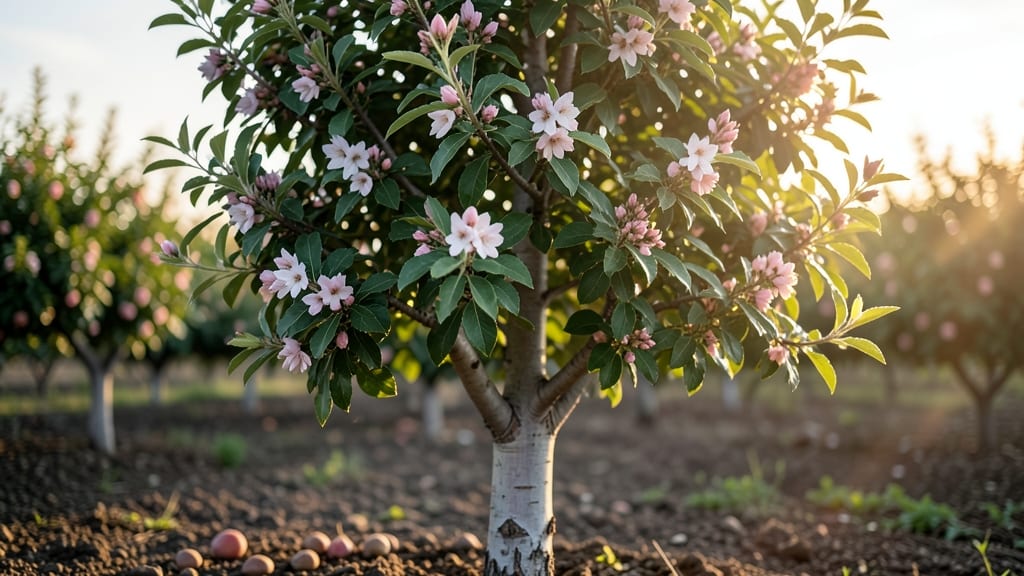
Most almond trees need a pollinator partner—but not these self-pollinating varieties that produce nuts without bees buzzing between branches. 🌱 I planted a Texas Improved almond last spring, and this fall, I’m harvesting nuts from a single tree where neighbors with traditional varieties got almost nothing.
The secret lies in choosing the right cultivars and understanding why some almonds break the pollination rules.
Self-pollinating almonds like Texas Improved, Independence, or Butte produce flowers that fertilize themselves, though cross-pollination can still boost yields. Plant at least two compatible varieties within 50 feet of each other for insurance—my Butte tree next to the Texas Improved gave me 30% more nuts last year.
These varieties thrive in USDA zones 6-9, making them perfect for home orchards from California to the Midwest.
You’ll end up with sweet, crunchy nuts straight from your yard, no honeybees required. The trees are drought-tolerant once established, and proper pruning in late winter keeps them productive for decades. Even my black-thumb neighbor grew enough almonds to share jars with the whole street—proof this isn’t just for experts.
For best results, plant in full sun with well-draining soil and avoid overwatering. Most self-pollinating varieties need 2-3 years to bear significant crops, but the wait is worth it. Whether you’re growing for fresh eating, baking, or selling at farmers’ markets, these trees deliver reliable harvests with minimal fuss.
📚 In This Guide
- What you need
- Instructions
- Tips and common mistakes
- Wrapping up and next steps
What you need
- ● Self-pollinating almond tree varieties: 1–3 trees (e.g., Nonpareil, Butte, or Fritz—check for self-compatibility labels).
- ○ Optional: A second variety for cross-pollination backup (if in doubt).
- ● Planting supplies: 1 high-quality 5-gallon container or planting hole (3x wider than root ball).
- ● 2–3 bags well-draining soil mix (or native soil amended with compost).
- ● 1 slow-release fertilizer (10-10-10 or almond-specific blend).
- ● 1 mulch (wood chips or straw, 2–3 inches deep).
- ● Tools for care: 1 pruning shears (bypass, sharp).
- ● 1 hand pruner (for smaller branches).
- ● 1 gloves (gardening or heavy-duty).
- ● 1 watering can or hose with nozzle (1–2 gallons capacity).
- ○ 1 pH testing kit (optional, for soil check).
- ● Climate: USDA Zones 5–9 (chill hours: 300–800, depending on variety).
- ● Sunlight: Full sun (6+ hours daily).
- ● Water access: Drip irrigation or soaker hose recommended.
- ● Space: 15–20 feet between trees (for airflow and growth).
- ● Legal check: Verify local frost dates and almond-growing regulations.
How to grow self-pollinating almond trees for reliable nut production
Self-pollinating almond varieties eliminate the guesswork of cross-pollination—here's how to plant and care for them successfully.
🌱 Step 1: Select the Right Self-Pollinating Variety
Not all almond trees self-pollinate—opt for proven varieties like Nonpareil, Butte, or Sonora, which reliably set fruit without cross-pollination. These varieties thrive in USDA Zones 6-10 and require full sun (at least 8 hours daily). I always verify chill hours (typically 300-600 hours below 45°F) to match your climate.
Young trees (3-5 years old) produce the best yields, so prioritize established nursery stock. Avoid grafted trees unless you're in a warm climate—the graft union may fail in colder zones. Check rootstock compatibility with your soil type (sandy loam works best).
☀️ Step 2: Plant in Well-Draining Soil with Optimal Sun
Almond trees despise soggy roots—amend heavy clay with 3-4 inches of coarse sand or grit before planting. Dig a hole twice as wide as the root ball but only as deep as the container's base. Place the tree so the graft union sits 2-3 inches above soil level (this prevents rot).
Spread roots gently without bending them, then backfill with native soil mixed with compost (use the 1 gallon you set aside earlier). Water deeply to settle the soil, then create a 4-inch-high berm around the base to direct water away from the trunk. Mulch with wood chips (spread the 2 cubic feet evenly) but keep mulch 6 inches away from the trunk.
💧 Step 3: Water Deeply and Monitor Soil Moisture
First year is critical—water once weekly (or when top 6 inches of soil feel dry) with 10-15 gallons per tree. Deep watering encourages strong root growth downward. Avoid overhead sprinklers (they spread fungal diseases). I use a soaker hose placed 12 inches from the trunk for precision.
After the first year, reduce watering to every 2-3 weeks in winter and weekly in summer. Overwatering causes brown leaf tips or root rot, while underwatering stresses trees and reduces nut production. Check soil moisture by hand—it should feel like a wrung-out sponge at depth.
✂️ Step 4: Prune for Airflow and Nut Production
Prune in late winter (before buds swell) to remove dead wood, crossing branches, and suckers at the base. Open the canopy by thinning branches to 8-12 inches apart—this improves airflow and sunlight penetration. Use clean, sharp pruners (sterilize with 70% rubbing alcohol) to prevent disease spread.
Focus on structural branches—remove any growing vertically (they compete with horizontal limbs for nutrients). Thin out 20-30% of the canopy annually to maintain vigor. Avoid heavy pruning after June—new growth won’t harden off before winter. Watch for sucker growth (shoots from the base)—remove these immediately to direct energy to nut production.
🌿 Step 5: Fertilize and Protect for Maximum Yield
Apply a balanced 8-8-8 fertilizer in early spring (use ½ pound per year of tree age, max 2 pounds). Spread evenly under the canopy, then water deeply. Avoid high-nitrogen fertilizers after June—they encourage leafy growth at the expense of nuts. I also add 1 cup of Epsom salt in spring for magnesium (deficiency causes yellowing between leaf veins).
Protect young trees from rodents (they gnaw bark) with tree guards and pest-repellent granules. In orchards, bird netting is essential—almonds are a prime target. Harvest when hulls turn brown and split open (typically late summer to fall, depending on variety). Shake branches gently to collect nuts, then dry in the sun for 3-5 days before storage.
Tips & tricks for thriving self-pollinating almond trees
Here's what nobody tells you about growing these reliable nut producers—details that separate good harvests from exceptional ones.
Variety Verification: When selecting your self-pollinating variety, cross-reference the 300-600 chill hours requirement with your local climate data. I've seen Nonpareil trees fail in Zone 7 because they needed more chill hours than advertised. Check your local agricultural extension service for precise microclimate data—this is the single most important factor after sun exposure. The 8 hours of full sun requirement is non-negotiable, but some varieties tolerate partial shade better than others.
Planting Precision: The 2-3 inches above soil level placement for the graft union is critical—this prevents rot while allowing flexibility for seasonal soil shifts. I've found that using a wooden stake to mark this level before planting helps maintain consistency, especially when working with multiple trees. The 4-inch berm around the base isn't just decoration—it's essential for directing water away from the trunk during those 10-15 gallon weekly waterings in the first year.
Watering Wisdom: That wrung-out sponge soil moisture test is your best friend. I've learned the hard way that almond trees are far more sensitive to overwatering than most fruit trees—brown leaf tips appear within days of excess moisture. For the 12-inch soaker hose placement, I recommend burying it slightly (1-2 inches) to prevent evaporation and ensure even moisture distribution. The soaker hose delivers water directly to the roots where it's needed most, unlike overhead sprinklers that waste water and promote disease.
Pruning Payoff: The 20-30% annual thinning of the canopy might seem drastic, but it's what transforms a bushy tree into a productive nut producer. Focus on removing branches that grow at angles less than 45 degrees from horizontal—they're energy vampires that never contribute to fruit production. I've found that using a small flag to mark branches for removal during my late winter pruning sessions helps me visualize the final structure before making cuts.
Pro Tips for Almond Tree Self Pollinating
- Here's what nobody tells you about growing these reliable nut producers—details that separate good harvests from exceptional ones.
- Variety Verification: When selecting your self-pollinating variety, cross-reference the 300-600 chill hours requirement with your local climate data.
- Planting Precision: The 2-3 inches above soil level placement for the graft union is critical—this prevents rot while allowing flexibility for seasonal soil shifts.
Frequently asked questions
Got questions about growing self-pollinating almond trees? You’re not alone—many gardeners want to simplify the process without relying on bees or cross-pollination. Here are the answers to the most common queries:
Can I grow a single self-pollinating almond tree and still get nuts?
Yes! Self-pollinating varieties like Nonpareil or Butte produce nuts without needing another tree. However, yields may be slightly lower than cross-pollinated trees. For best results, plant at least 2–3 compatible varieties nearby to boost production.
How long does it take for a self-pollinating almond tree to bear fruit?
Most self-pollinating almond trees take 3–5 years to mature and bear nuts, depending on climate and care. Dwarf varieties may fruit faster (2–3 years), while standard trees can take up to 7 years. Patience pays off—healthy trees reward you with consistent harvests!
Do self-pollinating almond trees need special care compared to non-self-pollinating ones?
Not much! They still require full sun (6+ hours/day), well-draining soil, and regular pruning to improve airflow. However, they’re less dependent on pollinators, making them ideal for urban or small gardens. Just ensure proper watering (especially during flowering) for optimal nut development.
Will my self-pollinating almond tree still attract bees or other pollinators?
While self-pollinating, almond trees still produce nectar and pollen, attracting bees and other pollinators. These visitors may still aid in cross-pollination, potentially improving yields. Plus, they’re great for local ecosystems—win-win!
What if my self-pollinating almond tree isn’t producing nuts? Troubleshooting tips?
Check these common issues:
- Age: Trees under 3–5 years may not fruit yet.
- Climate: Almonds need chill hours (300–600) and warm summers. If your area lacks this, yields will suffer.
- Pruning: Over-pruning or poor shaping can reduce flowering.
- Water/Nutrients: Drought or nutrient deficiencies (like zinc) can stunt fruit set.
Wrapping up and next steps
Growing self-pollinating almond trees is a game-changer for homesteaders and gardeners alike—no bees required! 🌱 These varieties simplify your orchard while still delivering sweet, flavorful nuts. Whether you’re working with limited space or just love low-maintenance gardening, these trees make nut production effortless.
Ready to plant your future harvest? Start by researching the best self-pollinating varieties for your climate, then grab your tools and get growing! With the right care, you’ll soon be enjoying homegrown almonds—no pollination drama in sight.