
Landscaping
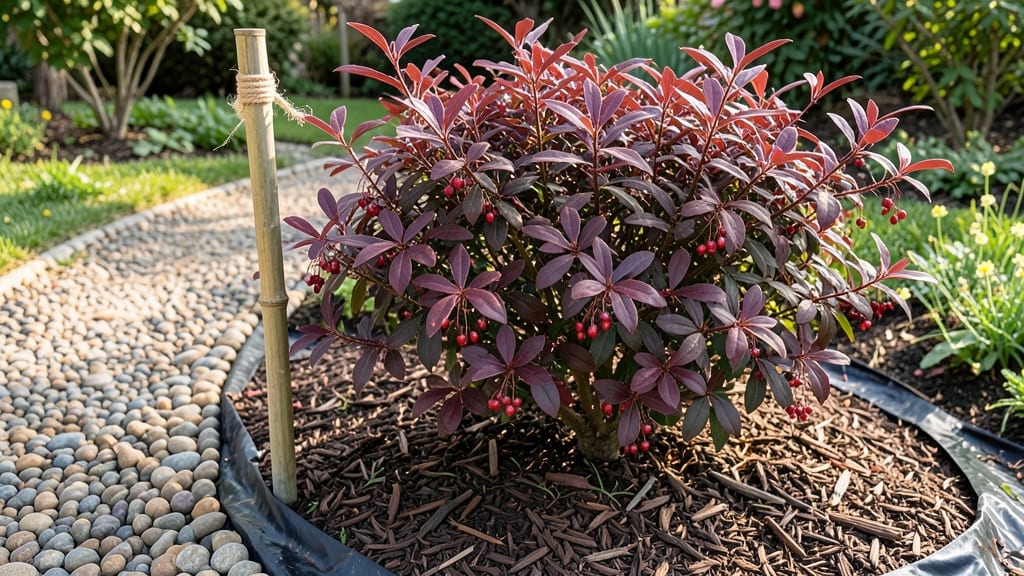
Creating a tree barrier landscaping solution that blocks nosy neighbors and winter winds takes patience—but the payoff is a lush, living privacy wall that only gets better with time. 🌲 I learned this the hard way after my first row of arborvitae took seven years to fill out.
Now, I use faster-growing evergreens like Leyland cypress or emerald green arborvitae to create that same dense screen in just three seasons.
The key is spacing them 3-5 feet apart, depending on the species' mature width. Plant in a straight line for a clean look, or stagger for a more natural feel. Most evergreens need full sun and well-draining soil—amend heavy clay with compost to help roots establish faster.
I've seen these barriers block views completely by their third summer, with minimal pruning needed after that.
What you end up with is a low-maintenance solution that outperforms fences or plastic screens. No painting, no rust, and no gaps that let wind or noise through.
Birds love nesting in the branches, and the roots help stabilize your soil too. Plus, property values go up when your yard looks this intentional.
Works best in zones 5-9, but check your local nursery for cold-hardy options if you're in colder climates. The biggest mistake? Planting too close together—give them room to grow, or you'll spend years trimming instead of enjoying your private oasis.
📚 In This Guide
- What you need
- Instructions
- Tips and common mistakes
- Wrapping up and next steps
What you need
- ● Evergreen seedlings or saplings: 10–20 per 10-foot section (fast-growing species like Thuja occidentalis or Leylandii work best).
- ● Compost or organic mulch: 2–3 cubic yards (for soil enrichment).
- ● Landscape fabric: 1 roll (to suppress weeds).
- ● Garden stakes: 10–20 (for support during planting).
- ○ Drip irrigation system: Optional but recommended (100–200 ft. tubing + emitters).
- ● Shovel & spade: 1 each (for digging holes).
- ● Wheelbarrow: 1 (for mixing soil).
- ● Measuring tape & string: To mark planting lines.
- ● Pruning shears: For trimming.
- ● Gloves & knee pads: For comfort.
- ● Check local zoning laws for height restrictions.
- ● Test soil pH (ideal: 5.5–7.0 for evergreens).
- ● Clear the area of weeds, rocks, and debris.
- ● Schedule planting in fall or early spring for best growth.
Step-by-step guide to designing an evergreen tree barrier
Here's how I create a lush, living privacy wall that grows into place over three years.
🌱 Step 1: Plan Your Layout and Spacing
First, map your barrier using stakes and string. Evergreens need 6-10 feet of space between each plant at maturity—check the variety tags for exact spacing. I always draw a rough sketch first to visualize the final wall. For a 4-foot-tall barrier, plant trees 4-5 feet apart; for 8-foot-tall, space them 8-10 feet apart. This ensures no gaps when they fill in.
Measure your property line carefully—you don’t want overhanging branches on your neighbor’s side. A 12-inch buffer from the property line prevents future disputes. Mark planting spots with flags or spray paint on the ground. Here’s the thing—skipping this step leads to uneven growth and wasted plants.
🪴 Step 2: Dig Holes and Amend the Soil
Dig holes twice as wide as the root ball but only as deep as the container. Evergreens hate sitting too deep—this encourages root rot. I use a shovel to loosen the soil at the bottom of the hole, breaking up compacted layers. Mix the excavated soil with 2-3 inches of compost (or the organic matter you have) to improve drainage and fertility.
For sandy soil, add a 5-gallon bucket of peat moss per hole to retain moisture. In heavy clay, mix in a shovel of perlite to aerate. Tap the hole sides gently to settle the amended soil before planting. This ensures roots won’t struggle to establish right away.
☀️ Step 3: Plant Trees at the Right Depth and Stake
Remove the tree from its container and loosen the roots if they’re circling. Place it in the hole so the top of the root ball sits 1 inch above ground level—evergreens settle over time, and you don’t want the trunk buried. Fill the hole with soil, pressing lightly to remove air pockets. Water deeply to settle everything.
Stake only if necessary—young evergreens with top-heavy growth (like Leyland cypress) need support. Use two stakes per tree, tied loosely with soft fabric strips (not wire). Bury stakes 6 inches deep and angle them outward to form a "V" for stability. Water again after staking to help roots adjust.
💧 Step 4: Water Deeply and Mulch Properly
Give each newly planted tree 1-2 gallons of water—enough to soak the root ball completely. Water 2-3 times per week for the first month, then taper to once a week once leaves appear. You’ll know it’s right when water drains out the bottom of the hole. Overwatering here is the fastest way to kill young evergreens.
Spread 2-3 inches of mulch (wood chips or pine straw) in a 3-inch-wide ring around each tree, keeping it 6 inches away from the trunk. Mulch locks in moisture and blocks weeds, but too much smothers roots. Replenish mulch annually—it breaks down faster than you think. This is the moment that matters: proper mulching prevents drought stress and keeps roots cool.
⏰ Step 5: Prune and Maintain for Fast Growth
Wait 6-8 weeks before pruning—let the tree focus on root growth first. Then, trim only brown or crossing branches with clean, sharp pruners. Never "shear" evergreens into a boxy shape—this stresses them and invites disease. Focus on removing 10-20% of the foliage at most to encourage bushier growth.
Fertilize once in early spring with a slow-release, evergreen-specific fertilizer (like 10-10-10). Water deeply after applying. Avoid high-nitrogen fertilizers—they promote soft, weak growth that snaps in wind. Check soil moisture weekly: evergreens wilt slowly, so don’t wait until leaves droop to water.
Tips & tricks for perfect evergreen privacy walls
Between us, these little details make all the difference when your privacy wall grows into a lush, living barrier. Here's what nobody tells you—
Spacing is Everything: The 6-10 foot spacing between trees isn't arbitrary—it accounts for mature growth patterns. I learned this the hard way after planting Leyland cypresses too close together. They'll fill in beautifully, but if you want a solid wall without gaps, stick to those measurements. For a 4-foot barrier, 4-5 feet apart is perfect; for 8-foot, 8-10 feet gives you that dense look. Pro tip: Use a measuring tape with flags to mark each spot before digging—it saves time and prevents uneven spacing.
Root Ball Depth Matters: Evergreens settle over time, and planting too deep buries the trunk, which can lead to disease. That 1-inch above ground level guideline is critical—it allows for natural settling while preventing trunk rot. I always double-check this by using a level to ensure the root ball sits perfectly straight in the hole. If you're planting on a slope, you might need to adjust the depth slightly to maintain that 1-inch clearance.
Watering Wisdom: The 2-3 gallons of water per tree isn't just about quantity—it's about technique. Water slowly until it drains out the bottom of the hole. This ensures the entire root ball gets saturated, not just the surface. I use a garden hose with a gentle spray attachment to avoid displacing soil. After planting, I water again after staking to help roots adjust to their new home. Overwatering here is the fastest way to kill young evergreens—don't let the soil stay soggy.
Mulch Like a Pro: That 2-3 inch layer of mulch isn't just for looks—it's a game-changer for moisture retention and weed control. The key is keeping it 6 inches away from the trunk to prevent rot. I use wood chips because they break down slowly and improve soil quality over time. Replenish annually, but don't overdo it—too much mulch can smother roots. This is where most people go wrong: they either don't mulch enough or pile it too high against the trunk.
Pro Tips for Tree Barrier Landscaping
- Between us, these little details make all the difference when your privacy wall grows into a lush, living barrier.
- Spacing is Everything: The 6-10 foot spacing between trees isn't arbitrary—it accounts for mature growth patterns.
- Root Ball Depth Matters: Evergreens settle over time, and planting too deep buries the trunk, which can lead to disease.
Frequently asked questions
Got questions about creating a tree barrier landscaping solution? You’re not alone! Here are answers to the most common queries—from planning to maintenance—so you can build your evergreen privacy wall with confidence.
How long does it really take for a tree barrier to provide full privacy?
A well-planned tree barrier can offer partial privacy in 1–2 years, but full density (like a living wall) typically takes 3–5 years for evergreens. Fast-growing species like Leyland cypress or emerald green arborvilla can reach 10–15 feet in 3 years, while slower varieties (e.g., thuja) may need more time. Check our 3-year growth chart for exact estimates!
Is a tree barrier more expensive than a wooden fence or hedge?
Upfront costs vary: wooden fences ($10–$30/ft) are cheaper initially, but tree barriers ($3–$10 per plant + installation) pay off long-term with zero maintenance (no painting/staining) and increased property value. Factor in soil prep, mulch, and irrigation—but remember, trees grow and appreciate!
What’s the best tree barrier for windy or coastal areas?
Salt spray and wind demand hardy, flexible evergreens. Top picks:
- Leyland cypress (tolerates wind but needs staking)
- Italian cypress (narrow, wind-resistant, but invasive in some areas)
- Arborvitae ‘Green Giant’ (dense foliage, salt-tolerant)
How do I prevent my tree barrier from becoming a fire hazard?
Fire risk depends on foliage density and local climate. To mitigate:
- Space trees 3–6 feet apart for airflow.
- Choose non-resinous evergreens (e.g., thuja over pine).
- Keep mulch 2–3 inches deep and 3 feet from trunks.
- Prune dead branches annually (especially in dry climates).
Can I mix shrubs and trees for faster privacy?
Absolutely!
Layering fast-growing shrubs (e.g., bamboo, privet, or holly) in front of slower trees creates immediate height while the trees fill in. Pro tip: Use evergreen shrubs (like boxwood or laurel) to avoid seasonal gaps. Just ensure all plants thrive in your light conditions—mismatches = patchy privacy!
Wrapping up and next steps
Transforming your yard into a lush, evergreen privacy wall in just three years is totally achievable with the right tree barrier landscaping strategy! 🌿 By choosing fast-growing, dense species like Leyland cypress or emerald green arborvitae—and following proper planting and maintenance techniques—you’ll enjoy year-round seclusion without the wait.
The key? Patience, planning, and a little elbow grease—but the payoff is worth it!
Ready to get started? Sketch your design, gather supplies, and plant your first row today! Your future privacy oasis awaits—just a few seeds (and seasons) away. 🌱