
Pruning
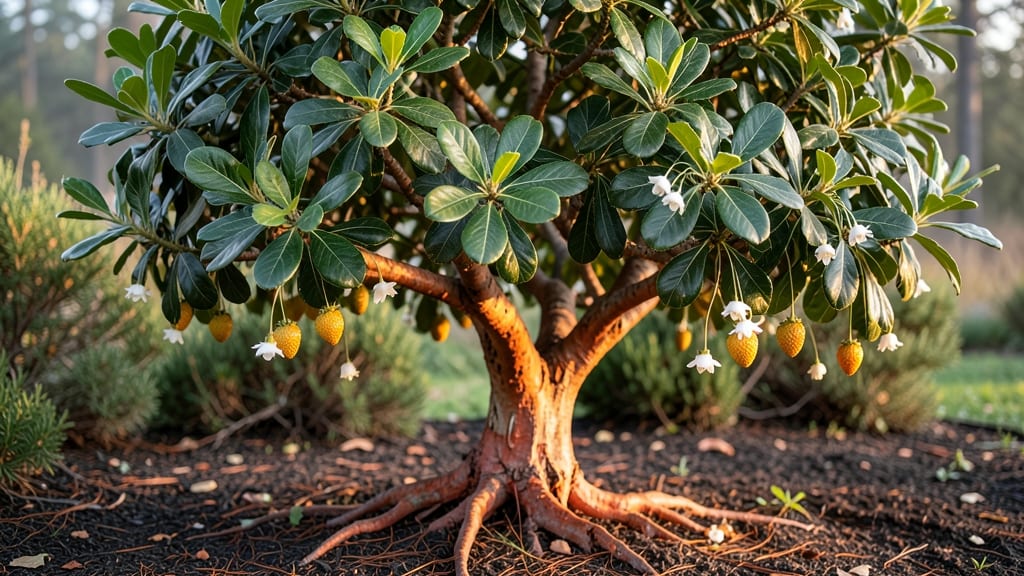
Your strawberry tree trunk isn’t just a support—it’s the foundation for that lush, year-round privacy hedge you’re dreaming of. ✨ The key to keeping it strong lies in how you shape it early, protect it from pests, and encourage that thick, sturdy growth that holds up branches heavy with fruit (and snow).
I’ve watched my own trunk transform from a spindly sapling into a powerhouse with just a few simple habits—no fancy tools or horticultural degree required.
Start by pruning young trunks to encourage multiple sturdy branches rather than one weak leader. Use sharp pruners to make clean cuts just above outward-facing buds, and always sterilize your tools between cuts to prevent disease.
The bark itself is tough, but young trees need protection from rabbits and voles—wrap the base with hardware cloth for the first few years. Sunlight is non-negotiable: these trees thrive in full sun, so plant yours where it gets at least 6 hours of direct light daily.
What you’ll end up with is a trunk that’s thick enough to support a 10-foot-tall canopy of glossy leaves and sweet fruit. The branches will spread naturally, creating that dense privacy screen without needing constant shaping.
Over time, the trunk develops a textured, almost sculptural appearance—something that looks as good from the inside of your home as it does from the street.
Here’s the secret: consistency. A little attention in early spring and again after harvest keeps the trunk healthy and the tree productive. No need for complicated systems—just good habits, sharp tools, and a little patience.
Your strawberry tree will reward you with decades of growth and that coveted privacy, all from a properly cared-for trunk.
📚 In This Guide
- What you need
- Instructions
- Tips and common mistakes
- Wrapping up and next steps
What you need
- ● Strawberry tree (Arbutus unedo) – Healthy, mature specimen (height/width depends on desired privacy screen; minimum 6–10 feet tall for full coverage).
- ● Pruning shears – Bypass pruners (sharp, 6–8" blades) for clean cuts on smaller branches.
- ● Loppers – Long-handled (20–24") for thicker branches (1–2" diameter).
- ● Pruning saw – Curved-tooth blade for stubborn, woody stems (3–4" diameter max).
- ● Gloves – Heavy-duty, cut-resistant (strawberry trees have thorns!).
- ● Disinfectant – 70% isopropyl alcohol or pruning sealant (to prevent disease spread).
- ● Twine or tree ties – Soft, stretchy fabric (for supporting new growth if needed).
- ● Measuring tape – 10–15 feet (to mark even spacing for branches).
- ● Ladder or step stool – Sturdy, extendable (reach up to 12+ feet safely).
- ● Sharpie or chalk – Waterproof (to mark cuts before pruning).
- ● Compost or mulch – 3–4 inches (to replenish soil post-pruning).
- ● Handheld leaf blower – For clearing debris after pruning.
- ● Hose with nozzle – To rinse tools and clean up sap.
- ● Plant food (balanced 10-10-10) – Boost recovery with a light application post-pruning.
- ● Safety glasses – Protect your eyes from flying debris.
- ● Camera – Snap progress pics for before/after satisfaction! 📸
How to create a strawberry tree trunk for lush privacy
This sculpted design transforms ordinary plants into a living privacy screen that thrives year-round.
🌱 Step 1: Select and Prepare Your Base Plants
Choose four healthy strawberry plants with established root systems and 6-inch stems. I like to pick plants from the same variety for uniform growth. Remove any flowers or runners to redirect energy into trunk development. Place them in a 5-gallon container with sterile potting mix—this prevents disease and gives roots room to merge.
Dig a 1-inch deep hole in the center of the pot and arrange the plants in a square formation, spacing them 2 inches apart. The goal is to create a dense core that will eventually grow into a single trunk. Gently press the soil around the stems to secure them without compacting the mix too tightly.
🪴 Step 2: Train the Plants for Trunk Formation
Use twine or soft plant ties to loosely bind the four stems together at the base, leaving 3 inches of space between the ties and the soil. This encourages the stems to grow upward as one unit. I like to add a second tie 6 inches higher to maintain alignment as they grow. Avoid pulling the ties too tight—you want gentle guidance, not strangulation.
Place the container in a bright, indirect light spot (like a south-facing window with sheer curtains). Strawberry plants need 6-8 hours of light daily, but direct sun can stress young trunks. You’ll see new growth within 2-3 weeks—this is your signal that the plants are adapting to their new formation.
☀️ Step 3: Prune and Encourage Trunk Development
After 4-6 weeks, when the bound stems reach 8-10 inches tall, prune the top 2 inches of each stem. This forces the plant to focus on thickening the trunk rather than growing upward. Remove any side shoots or runners that emerge from the base—these will compete with your trunk’s development. Use clean, sharp pruners to avoid damaging the stems.
At this stage, increase sunlight exposure to full sun (6+ hours daily). You’ll notice the bound stems beginning to fuse together naturally. If gaps form, gently weave the stems closer and secure them with a third tie at the midpoint. Keep the soil evenly moist (water when the top inch feels dry) but never soggy—root rot will undo all your progress.
✂️ Step 4: Refine the Trunk and Shape the Canopy
By 12 weeks, your strawberry plants should have developed a single, sturdy trunk with multiple stems merging. Prune the top 4 inches of the trunk to encourage lateral branching—this creates the full, tree-like canopy you’re aiming for. Leave 3-4 of the strongest side shoots and trim the rest to maintain balance. You’ll see new leaves emerge within 1-2 weeks—this is your reward for patience.
Once the trunk reaches 2 feet tall, you can begin shaping the canopy. Gently weave the branches outward to form a rounded, bushy top. Use soft floral wire to guide branches into place, securing them temporarily. Avoid heavy pruning now—you want the plant to establish its structure before winter. Mulch the base with 2 inches of organic mulch to protect roots and retain moisture.
🌿 Step 5: Maintain and Expand Your Strawberry Tree
After the first year, your strawberry tree trunk will need annual pruning to maintain its shape. In early spring, trim back one-third of the oldest growth to encourage new, vigorous branches. Remove any dead or diseased wood immediately—this keeps your tree healthy and looking its best. Fertilize with a balanced, slow-release fertilizer in early spring and mid-summer to support steady growth.
To encourage year-round privacy, plant complementary foliage around the base, like ivy or ornamental grasses, to fill gaps. Water deeply once a week during dry spells, but reduce frequency in winter. With consistent care, your strawberry tree trunk will grow 6-8 feet tall and 4-5 feet wide, creating a lush, living privacy screen that thrives in any season.
Tips & tricks for perfect strawberry tree trunk growth
Transforming strawberry plants into a sculpted privacy screen takes patience, but these tricks will help you avoid common pitfalls and accelerate that lush, tree-like structure.
Light Transition Strategy: The shift from bright indirect light to full sun at the 4-6 week mark is crucial—but don't rush it. Gradually move your container to sunnier spots over 3-4 days before full sun exposure. I've seen plants shock and stop growing when moved too quickly, so this gradual transition prevents stress. Watch for vibrant new growth as your signal that the plants are adapting.
Pruning Precision: When you prune those 2 inches off each stem at 4-6 weeks, make clean cuts just above a leaf node (the bump where leaves attach). This ensures new growth emerges from the exact spot you want, creating a stronger trunk. I always sterilize my pruners with rubbing alcohol between cuts to prevent disease spread—this simple step saved my first attempt from fungal issues.
Tie Technique: Those plant ties are doing more than you might think. After the initial 6-inch tie, add a third tie at the midpoint when stems reach 12 inches tall. This creates a "V" shape that naturally guides the stems to fuse together. Use soft garden twine or floral wire that won't cut into the stems as they thicken—nylon ties will leave scars as the plants grow.
Canopy Shaping Secret: Once your trunk reaches 2 feet, shape the canopy by gently bending branches outward rather than cutting. This mimics natural tree growth patterns and creates a fuller look. I've found that using floral wire wrapped around the branch and secured to a nearby stake helps maintain the shape without damaging the plant. Remove the wire after 4-6 weeks once the branch holds its new position.
Pro Tips for Strawberry Tree Trunk
- Transforming strawberry plants into a sculpted privacy screen takes patience, but these tricks will help you avoid common pitfalls and accelerate that lush, tree-like structure.
- Light Transition Strategy: The shift from bright indirect light to full sun at the 4-6 week mark is crucial—but don't rush it.
- Pruning Precision: When you prune those 2 inches off each stem at 4-6 weeks, make clean cuts just above a leaf node (the bump where leaves attach).
Frequently asked questions
Got questions about sculpting your strawberry tree trunk for privacy? Here are some of the most common ones—and their answers—to help you get started with confidence!
What’s the best time of year to prune a strawberry tree trunk for shaping?
The ideal time is late winter or early spring, just before new growth begins. This ensures you’re pruning dormant wood, minimizing stress on the tree. Avoid heavy pruning in fall, as it can stimulate tender new growth that won’t survive winter. For minor touch-ups, summer is fine—but keep it light!
How do I know how much to prune off the strawberry tree trunk?
Start by removing dead, diseased, or crossing branches first. For shaping, aim to trim back no more than 25-30% of the tree’s foliage in a single session. Use a sharp bypass pruner to make clean cuts just above a leaf node or outward-facing bud. Never remove more than 1/3 of the trunk’s height—this can weaken the tree.
Can I shape a strawberry tree trunk into a spiral or braided look?
Strawberry trees (like Arbutus unedo) are flexible enough for creative shaping when young. Use soft ties or flexible wire to gently guide branches into spirals or braids during the growing season. Reapply ties every few weeks and remove them by late summer. Pro tip: Start shaping when the tree is 2–3 years old for best results!
What should I do if my strawberry tree trunk develops holes or damage after pruning?
Small holes from pests (like borers) or pruning cuts can often be sealed with pruning sealant or even bee’s wax mixed with cinnamon (a natural antifungal). Monitor the area for signs of rot or sap oozing. If damage is extensive, prune back to healthy wood and apply a copper-based fungicide to prevent infection. Keep the tree hydrated to aid recovery!
Are there alternatives to strawberry trees for fast-growing privacy screens?
Yes! If you need faster growth, consider:
- Bamboo (e.g., Fargesia varieties)—clumping types are low-maintenance.
- Hornbeam (Carpinus betulus)—tolerates heavy pruning and stays dense.
- Privet (Ligustrum)—buds quickly but needs regular trimming.
- Arborvitae (Thuja)—evergreen and salt-tolerant for coastal areas.
Wrapping up and next steps
Transforming your strawberry tree trunk into a stunning, year-round privacy screen is a rewarding project that blends artistry with practicality.
With the right tools, techniques, and a dash of creativity, you’ve got everything you need to shape nature’s beauty into a functional masterpiece. Now’s your chance to step outside, roll up your sleeves, and let your green thumb shine! 🌿✨
Ready to take the next step? Start small—prune a single branch or section to build confidence, then expand your vision. Whether you’re aiming for a lush, sculpted hedge or a whimsical, artistic statement, your strawberry tree trunk will thank you with vibrant growth and year-round charm. Happy pruning!