
Propagation
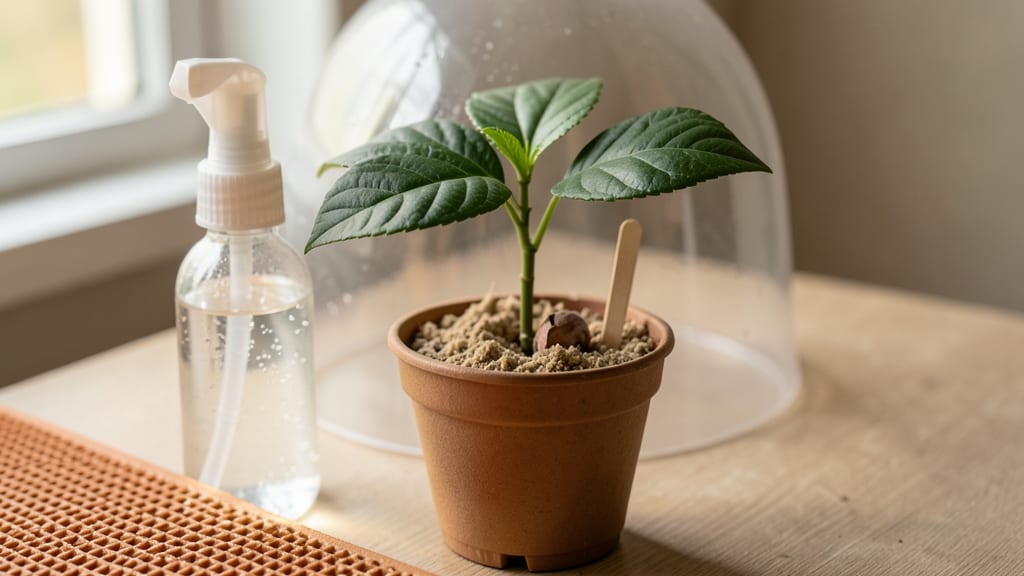
Growing a mango tree from seed indoors means tropical sunshine on your windowsill in just 6 months. 🌱 I’ve started three this way—two survived, one didn’t—and the thriving pair now sport glossy leaves and the promise of future fruit.
The secret lies in mimicking their humid, warm homeland, even in a city apartment.
You’ll need a ripe mango (any variety works), patience, and a sunny spot. The seed germinates in 2-4 weeks if kept warm and moist, then needs consistent light to avoid leggy growth. Most beginners overwater, but mango seeds hate soggy soil—think "damp sponge," not "swamp."
By month 6, your seedling will be 1-2 feet tall with sturdy stems, ready for a slightly larger pot. The real magic? Those first tiny leaves smell faintly sweet—like a preview of the mangoes to come. (Yes, they’ll eventually fruit, though it takes years.)
Troubleshooting is simple: yellow leaves mean too much water; slow growth means more light. Even my black thumb’s version thrived with these adjustments. Ready to grow your own tropical promise?
📚 In This Guide
- What you need
- Instructions
- Tips and common mistakes
- Wrapping up and next steps
What you need
- ● Mango seed: A fresh, plump seed from a ripe mango (preferably organic or pesticide-free).
- ● Small pots (4-6 inches in diameter): 2-3 pots with drainage holes (plastic or terracotta).
- ● Well-draining potting mix: A blend of coconut coir, perlite, and peat moss (or a cactus/succulent mix).
- ● Spray bottle: For gentle watering.
- ● Clear plastic bag or humidity dome: To maintain moisture during germination.
- ● Grow lights or sunny windowsill: A south-facing window or LED grow lights (12-16 hours/day).
- ○ Fertilizer (optional but helpful): A balanced, water-soluble fertilizer (5-5-5 or 10-10-10) for seedlings.
- ● Seedling heat mat: Speeds up germination if your home is cool.
- ● Humidifier or pebble tray: Boosts humidity for tropical seedlings.
- ● Pruning shears: For trimming leggy growth later.
- ● Larger container (10+ inches): For transplanting once the seedling outgrows its first pot.
Step-by-Step instructions for growing a mango tree from seed indoors
Here's how to nurture a tropical mango seed into a thriving houseplant—no greenhouse needed.
🌱 Step 1: Extract and Prepare the Seed
Start with a fresh mango pit—never dried or stored seeds. Rinse it thoroughly under warm water to remove any fruit residue, then let it air-dry for 24 hours. The seed's outer shell is tough, so I lightly sand the sides with 120-grit sandpaper until you see a thin, even layer removed. This doesn't damage the seed but helps water penetrate later.
Soak the seed in lukewarm water for 24-48 hours, changing the water every 12 hours. You'll know it's ready when the outer shell softens and a tiny root sprout (radicle) appears. This step mimics natural rainfall and kickstarts germination. Real talk: if you skip this, your seed may take 3-4 weeks to sprout instead of 7-10 days.
🪴 Step 2: Plant the Seed in a Moist Growing Medium
Fill a 4-inch diameter pot with well-draining potting mix—I blend equal parts cactus/succulent mix and perlite for aeration. Mango seeds hate soggy soil, so drainage is critical. Plant the seed 1 inch deep, with the radicle (root sprout) facing downward. Gently pat the soil around it to eliminate air pockets.
Place the pot in a clear plastic bag (like a gallon Ziploc) to create a humid microclimate. Secure the bag loosely with a rubber band—you want airflow but trapped moisture. Set the pot in a warm spot (75-85°F), like on top of a refrigerator or near a south-facing window. Check daily for condensation; if the bag fogs up, open it for 30 minutes to prevent mold.
☀️ Step 3: Provide Warmth and Indirect Light
Germination takes 7-14 days, but patience is key—some seeds take up to 30 days. Keep the soil evenly moist (not soggy) by misting the bag's interior when the surface feels dry to the touch. Once the seedling emerges, remove the bag immediately to prevent fungal growth. You'll see first true leaves (not the initial seed leaves) in 4-6 weeks—that's your cue to start adjusting care.
Move the seedling to bright, indirect light (east or west window). Avoid direct sun—young mango leaves burn easily. If your home lacks natural light, supplement with a grow light (12-14 hours/day) placed 6-12 inches away. Leggy growth (long, pale stems) means it's stretching for light—adjust immediately or the plant weakens permanently.
💧 Step 4: Transition to Container Care
When the seedling reaches 6 inches tall (usually 3-4 months in), repot it into a 6-inch pot with standard potting mix (add 20% perlite for drainage). Mango trees grow fast, so upgrade pots every 6-12 months—root-bound trees stress easily. Water when the top 1-2 inches of soil feel dry, but never let it sit in water. Overwatering kills mango seeds faster than anything else.
Fertilize lightly every 2 months with a balanced liquid fertilizer (10-10-10) diluted to ½ strength. Too much fertilizer burns tender roots. By 6 months, your seedling should have 5-7 leaves and a sturdy stem. This is when it starts resembling a real mango tree—finally!
✂️ Step 5: Prune and Train for Shape
Pinch back the top set of leaves when the plant hits 12 inches to encourage bushier growth. Mango trees grow tall and leggy indoors, so prune 1/3 of the new growth in early spring to maintain shape. Use sterilized scissors and cut just above a leaf node (where leaves attach) to avoid tearing the stem.
Rotate the pot quarter-turn weekly so the tree grows evenly toward the light. If it leans, it's telling you to adjust its position. With consistent care, your indoor mango tree can reach 6-8 feet tall—though fruiting indoors is rare, the lush foliage makes it a stunning tropical statement plant. Here's the thing—even if it never bears fruit, the journey is worth it.
Tips & tricks for growing a mango tree from seed indoors
Here's what I learned after nurturing multiple mango seedlings—these details make all the difference between thriving and struggling.
Seed Preparation Secret: When sanding the seed in Step 1, focus on the sides where the radicle will emerge—avoid the ends. I learned this the hard way after nicking the seed's vital area and delaying germination by nearly a week. Use a fine-grit sandpaper (120-grit) and work in small circles to create an even surface for water absorption. The goal is to create tiny micro-cracks without damaging the seed's integrity.
Germination Environment: The 75-85°F warmth mentioned in Step 2 is non-negotiable for consistent germination. If your home stays cooler, place the pot on top of a refrigerator or use a seedling heat mat set to low. I've seen seeds take 3 weeks instead of 10 days when kept below 70°F. Also, the plastic bag creates a greenhouse effect—just remember to open it daily for 30 minutes to prevent mold. Watch for condensation buildup as your moisture indicator.
Light Transition Strategy: In Step 3, when moving your seedling to bright indirect light, introduce it gradually over 3-4 days. Sudden exposure to strong light causes shock, turning leaves yellow or crispy. Start with 1-2 hours of morning light, then increase daily. For grow lights, I recommend LED bulbs—they emit less heat than incandescent options, which can scorch delicate young leaves. The 12-14 hour light cycle should be consistent, but match your home's natural daylight patterns as closely as possible.
Pruning Precision: The 1/3 pruning rule in Step 5 works best when you cut just above a leaf node where new growth will emerge. I always sterilize my scissors with rubbing alcohol between cuts to prevent bacterial spread. For the first pruning at 12 inches, focus on the topmost leaves—this encourages lateral branching that creates a bushier tree. Avoid cutting into old wood, as mango trees struggle to regrow from mature stems. Think of it as training your tree to grow horizontally rather than vertically.
Pro Tips for Grow A Mango Tree From Seed Indoors
- Here's what I learned after nurturing multiple mango seedlings—these details make all the difference between thriving and struggling.
- Seed Preparation Secret: When sanding the seed in Step 1, focus on the sides where the radicle will emerge—avoid the ends.
- Germination Environment: The 75-85°F warmth mentioned in Step 2 is non-negotiable for consistent germination.
Frequently asked questions
about growing a mango tree from seed indoors—because every gardener has doubts! Here are answers to the most common questions to help you nurture your tropical dream.How long does it take for a mango seed to sprout?
A mango seed typically sprouts within 2–4 weeks if kept warm (70–80°F) and moist. Patience is key—some seeds may take up to 6 weeks. Keep the soil consistently damp (not soggy) and place the pot in a bright, indirect light spot to encourage germination.
Will my indoor mango tree ever produce fruit?
Probably not in the first few years! Indoor-grown mango trees from seed are dwarf varieties and may take 5–10 years (or longer) to bear fruit—if ever. For faster results, consider grafting or buying a young tree. Focus on enjoying the lush foliage and learning the process first!
What’s the best temperature for indoor mango seed growth?
Mango seeds thrive in warmth—aim for 70–85°F (21–29°C) during germination. Once sprouted, maintain 65–80°F (18–27°C) indoors. Avoid drafts (like AC vents) or cold windowsills, as chilly temps can stunt growth. A heat mat can help if your home runs cool.
Can I grow a mango tree from store-bought mango seeds?
Yes! Store-bought mango seeds work fine, but choose ripe, organic fruit for the best results. Avoid seeds from hybrid or treated mangoes (like those sprayed with fungicides), as they may not germinate well. Rinse the seed gently before planting to remove any residue.
Why is my mango seedling wilting or turning yellow?
Wilting or yellowing leaves usually signal overwatering, underwatering, or poor drainage. Check the soil—it should feel moist but not soggy. Ensure the pot has drainage holes, and water only when the top inch of soil is dry. Yellow leaves can also mean nutrient deficiency; fertilize lightly with a balanced houseplant food every 2–3 months.
Should I transplant my mango seedling outdoors eventually?
Only if you live in a tropical or subtropical climate (USDA Zones 10–11)! Mango trees cannot survive frost—even young seedlings. If you want to move it outside, wait until it’s at least 2–3 feet tall and plant in spring after the last frost. In colder climates, keep it indoors year-round as a decorative plant.
Wrapping up and next steps
Growing a mango tree from seed indoors is a rewarding journey that blends patience with the joy of nurturing life! 🌱 While the fruit may not match store-bought varieties, the process teaches you the magic of propagation—and who knows?
Your tiny sapling could one day thrive outdoors in warmer climates. Start small, stay consistent, and celebrate each milestone, like those first leaves or sturdy stems.
Ready to take the next step? Once your seedling reaches 12–18 inches, research transplanting guidelines for your climate. If you’re in a colder zone, dream big: plan for a sunny patio or greenhouse escape! 🌞